How to be a responsible steward of Democracy, Human Rights Capitalism and Planet Earth.


HOW TO BE A RESPONSIBLE STEWARD OF PLANET EARTH


Creating a better world for all through social media activism

Tuesday, August 27, 2019

What will remain?


“What will remain – what already remains, in some areas – is a landscape empty of virtually every animal except fish, rats, a few amphibians and more snakes.”


Sunday, August 18, 2019

Spider Bytes


grad student. spider advocate. biologist: behavioural ecology of spiders. Rstats. knitting. arachnology. photos by . avatar by she/her
occupied lands of the Anishnabeg, Chippewa, Haudenosaunee, Mississaugas of the Credit River, & Wendat
Born 1986

Joined April 2013

http://spiderbytes.org/


A blog about spiders. → The real house spiders of Vancouver

There was a huge spider running toward me from down by a hall closet.  Not wanting to kill it, I tried to catch it in a plastic container with no luck.  

It was pretty close to Lola's daytime bed (dog) so I got a cane to crush it this time.  He got away.  So I left the balcony door open so he could leave in the night.  

At this time of year spiders are coming indoors to winter in the warmth so this blog has timely information.

This is a blog about spiders.

Home
About me / CV
This is a blog about spiders!
Recluse or Not?


The real house spiders of Vancouver

Posted on December 23, 2013

(and other West Coast cities)

UPDATE (28 July, 2018): The scientific names used in this post are out of date. The giant house spider is now Eratigena duellica, and the hobo spider is Eratigena agrestis. Tegenaria domestica remains the same!

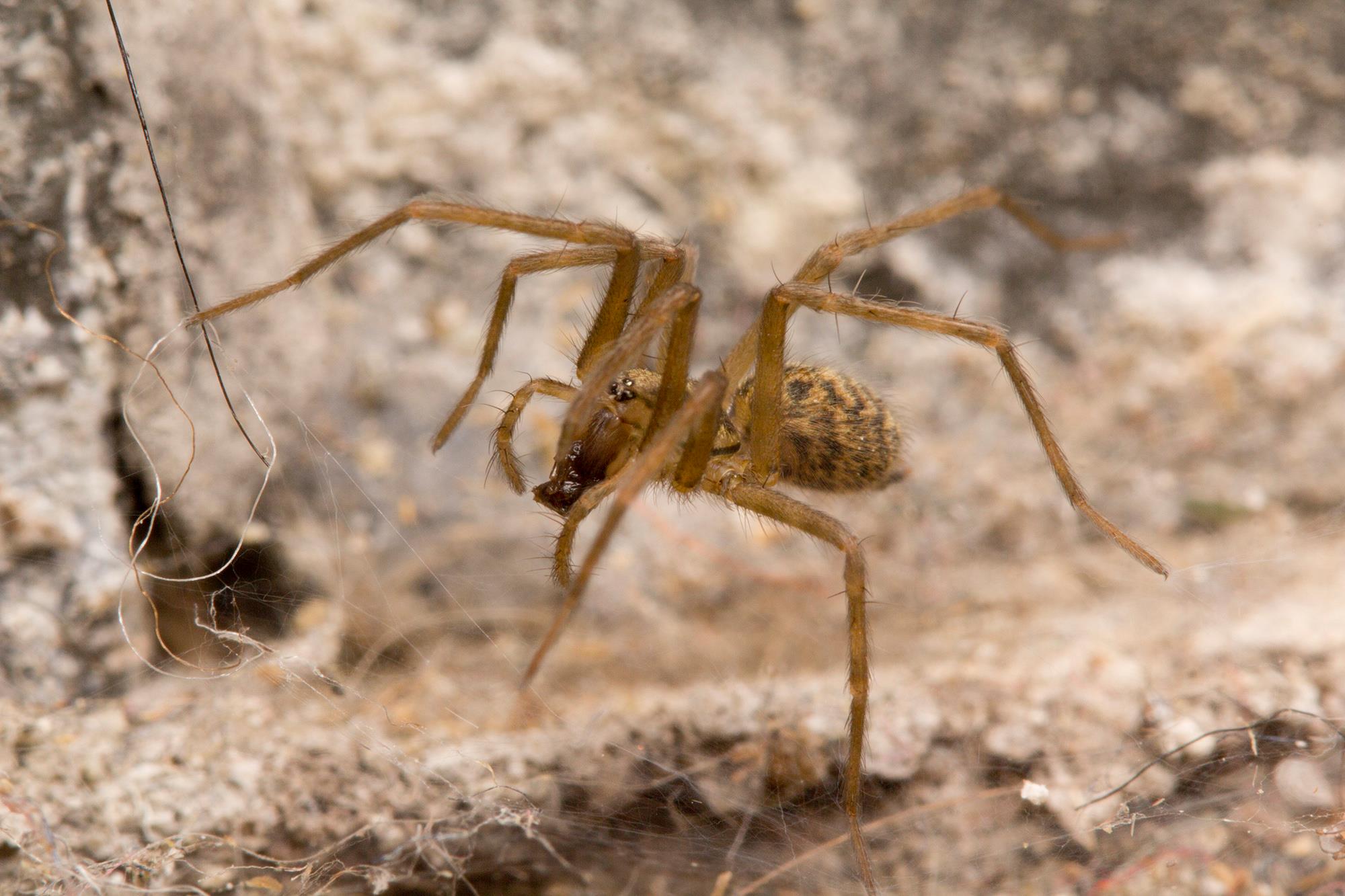
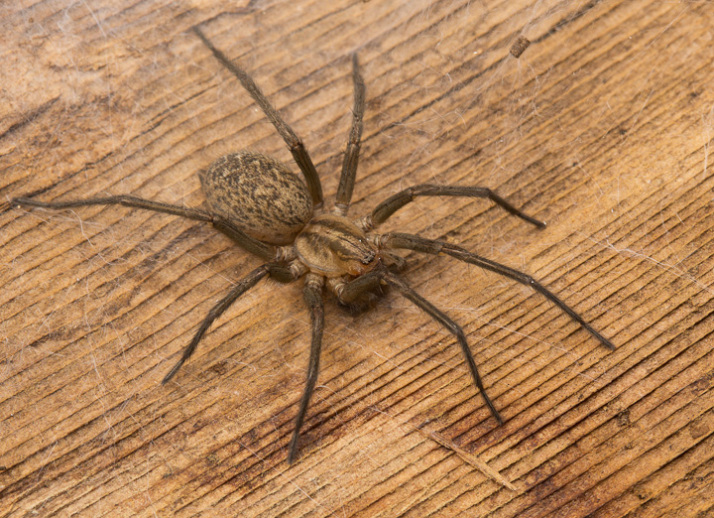
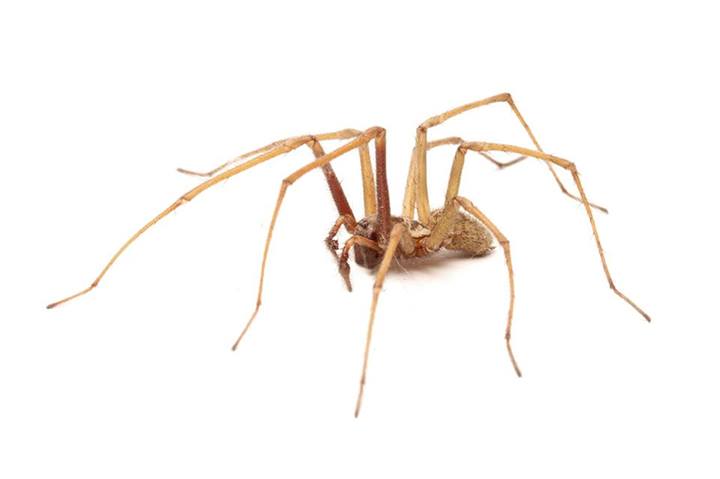
Living in Vancouver, I frequently hear about a HUGE hairy spider that was trapped in the bath or lurking in the bedroom or scuttling across the kitchen floor. More often than not, it’s described as a wolf spider (family Lycosidae). I’m pretty confident that every single time, the spider being referred to is actually a member of the family Agelenidae, and in particular, the genus Tegenaria. I’m almost as certain that the species in question is Tegenaria duellica, commonly called the giant house spider or European house spider.


NOT a wolf spider. Female Tegenaria duellica (Agelenidae) Photo: Sean McCann*

Sometimes the slightly better informed giant-spider-spotter will have taken a closer look at the spider, or photographed it, then done some online research and concluded that it’s the ‘dangerous’ hobo spider, Tegenaria agrestis. 


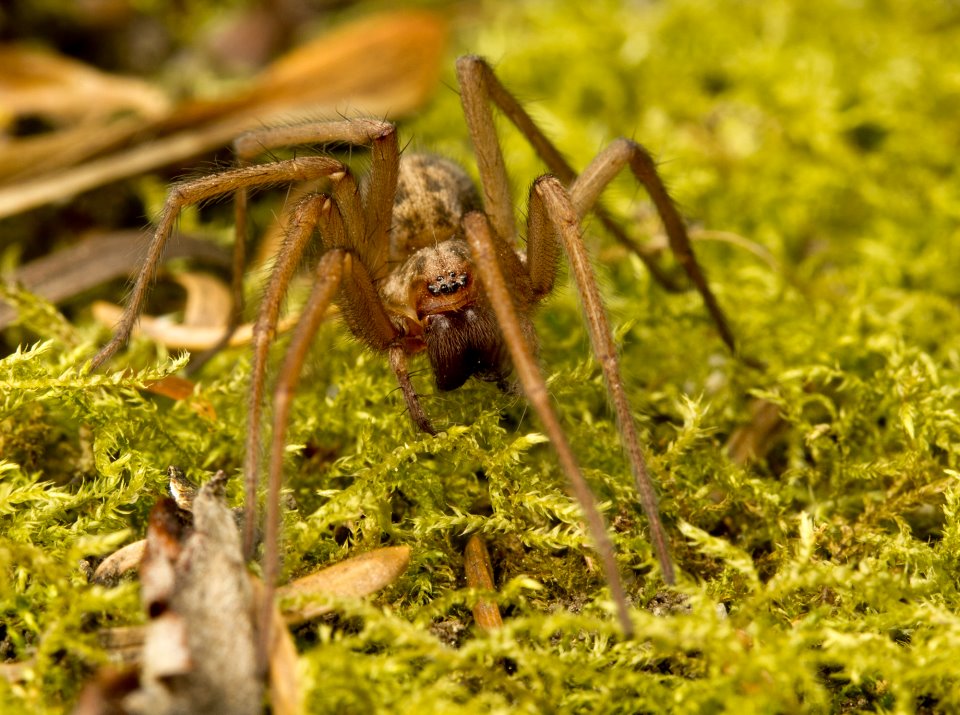
Female hobo spider, Tegenaria agrestis. These spiders may also be found in houses on the west coast of BC, but are generally not as large as T. duellica.

There is a lot of flat-out wrong information on the internet about hobo spiders and their supposed ability to cause necrotic lesions. Some people mistakenly refer to T. agrestis as aggressive house spiders. (1) They aren’t. And, (2) agrestis means ‘of the field’. As for ‘dangerous’, arachnologists Robb Bennett and Rick Vetter


“know of no authentic Canadian report of hobo spider envenomation.”

See their paper on the misdiagnosis of spider bites in Canada for more reasons not to fear hobo spiders. Having done a bit of work with Tegenaria agrestis, both in the field (on Vancouver Island) and in the lab, I can personally confirm that they are far more likely to be running away from humans than attempting to bite them (just like other Tegenaria species).


A charming female Tegenaria. Neither aggressive nor at all interested in human flesh.

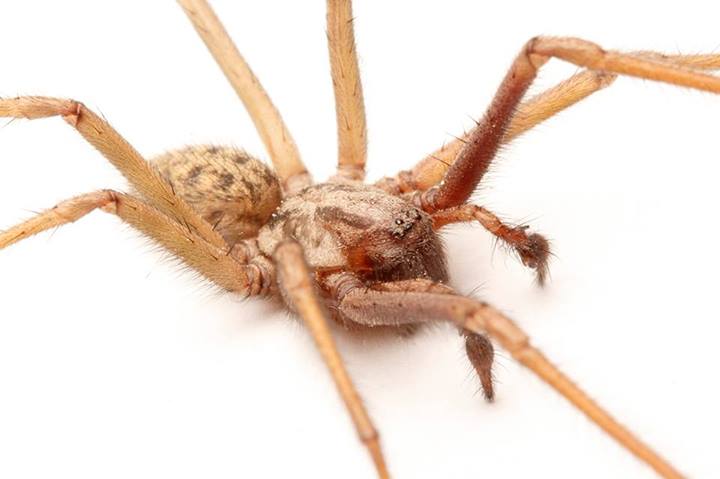
Both hobo spiders and giant house spiders can be found living alongside humans on the west coast. They are not easy to tell apart, but Rick Vetter and Art Antonelli have prepared an excellent identification guide that will tell you at the very least if it’s NOT a hobo spider (not that there would be any cause for alarm if it was one). In a house in southern BC, that leaves you with T. duellica (larger) or T. domestica (smaller).


If it has long pointy palps like this guy, it’s NOT a hobo spider, but either T. duellica or T. domestica.

Even without the (fairly recent) hype about the ‘medically significant’ hobo spider, humans seem to generally fear and despise Tegenaria. In The World of Spiders—a delightful book in which the author’s passion for his subjects fairly leaps off every page–W.S. Bristowe admitted that he had no affection for house spiders. In their defence, however, he wrote that,


“A Tegenaria cannot deliver a painful bite. Its unpopularity arises from its leg span, its rapid movements and general creepyness.”

Male Tegenaria duellica. Long-legged and disposed to ‘general creepyness’.

The movement of these spiders is indeed disconcerting. Males are pretty much all leg, and they can run FAST. Bristowe noted that Tegenaria atrica can run a distance equivalent to 330 times her body length in 10 seconds. This means a human-length (let’s say 5’9″, or 1.75 m) Tegenaria could run the 100-metre dash in 1.73 seconds. Pretty speedy.

But apart from their occasionally-startling dashing to-and-fro (mainly in the fall when males go on the prowl, abandoning their webs to search for females), house spiders in general are fabulous to have around. They are great at taking care of all manner of arthropod home-invaders and are really fun to observe.


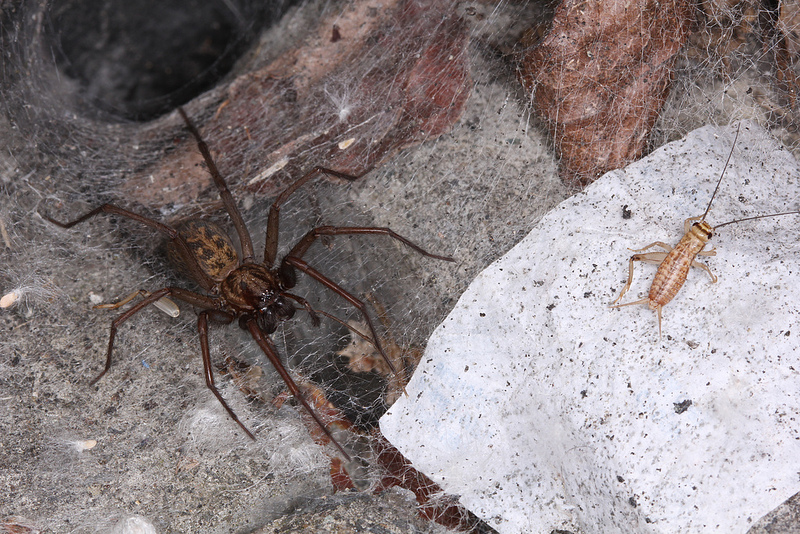
House spiders, like this Tegenaria that set up shop just inside the door of our lab, help out by snacking on any bugs that might also enjoy living inside buildings.

If you really can’t stand having them in your home, relocate them outside, and with luck they’ll find a nearby crevice in which to build the retreat of their funnel-shaped webs. You probably won’t often catch them out on their silk sheets, as they will run and hide in their retreats at the slightest disturbance.

Usually house spiders wait for prey just inside their tube-like silk retreat. We enjoy attempting to entice this Tegenaria (who lives just outside our lab) to come out and say hi by dropping small insects onto her sheet web. The speed with which she can dart out and snag prey is quite stunning!

If you’re still not convinced that house spiders are good neighbours rather than enemies, you could always try Bristowe’s method for curing fear of Tegenaria: eat one**.

*Sean McCann, a house spider enthusiast, provided all the photographs for this post. He’d like it to be noted that in addition to being incredibly fast, house spiders also *sound* creepy (if you’re lying on the floor and one runs past your head).

**It didn’t actually end up curing his fear of house spiders, but he did win a lot of money as a result.

SHARE THIS:


Saturday, August 17, 2019

The Graduate One word: "plastics"


I think of this scene often because we all look for profitable ways to spend our time and this looked like the ultimate insider tip in 1967.  To see the damage to the Planet wrought by "plastics" in the 50+ years since the movie was released is nothing less than stunning!

The Graduate   One word: "plastics"


Baby Dugong Rescued in Thailand only to Die from eating Plastic Pollution in the Ocean


Dugong is a species of marine mammal similar to the American manatee


In this photo from May, an official of the Department of Marine and Coastal Resources feeds seagrass spread to Marium, a baby dugong who became separated from her mom in Libong island, Trang province, southern Thailand. The dugong has since died. (Sirachai Arunrugstichai/The Associated Press)


An eight-month-old dugong nurtured by marine experts after it was found lost near a beach in southern Thailand has died of what biologists believe was a combination of shock and ingesting plastic waste, officials said Saturday.


The female dugong — a large ocean mammal — was named Marium and became a hit in Thailand after images of biologists embracing and feeding her with milk and seagrass spread across social media. Veterinarians and volunteers had set out in canoes to feed Marium up to 15 times a day while also giving her health checks.


Last week, she was found bruised after being chased and possibly attacked by a male dugong during the mating season, said Jatuporn Buruspat, director-general of the Department of Marine and Coastal Resources.


Conservation teams tried to help the animal, which became separated from her mother

She was brought in for treatment in the artificial sea on Libong Island in Krabi province.

"We assume she wandered off too far from her natural habitat and was chased and eventually attacked by another male dugong, or dugongs, as they feel attracted to her," Jatuporn said Saturday.
An autopsy showed a big amount of plastic waste in her intestine, which could also have played a part in her death as it led to gastritis and blood infection, he said.


"She must have thought these plastics were edible," Jatuporn said.
The dugong is a species of marine mammal similar to the American manatee and can grow to about 3.4 metres in length. Its conservation status is listed as vulnerable.
Natural Resources and Environment Minister Varawut Silpa-arcpha said at a news conference that Marium's corpse will be stuffed for research purposes, and that the animal's death saddens the whole nation and the world.
"Her death will remind Thais and people all over the world not to dispose of trash into the oceans," he said.


Monday, July 1, 2019

Stop eating fish to save the life in our seas


Research Professor @TheLBJSchool at the University of Texas. Author of "Stuffed and Starved", and co-author of "A History of the World In Seven Cheap Things"

Austin, Texas


Vital analysis from @GeorgeMonbiot :
Stop eating fish. It’s the only way to save the life in our seas 


https://www.theguardian.com/commentisfree/2019/may/09/seas-stop-eating-fish-fishing-industry-government?CMP=share_btn_tw …


Fishing

Stop eating fish. It’s the only way to save the life in our seas
 
George Monbiot


Unhindered by regulation, driven by greed, the fishing industry is the greatest threat to our oceans. We must take action
@GeorgeMonbiot

Thu 9 May 2019 06.00 BSTLast modified on Thu 9 May 2019


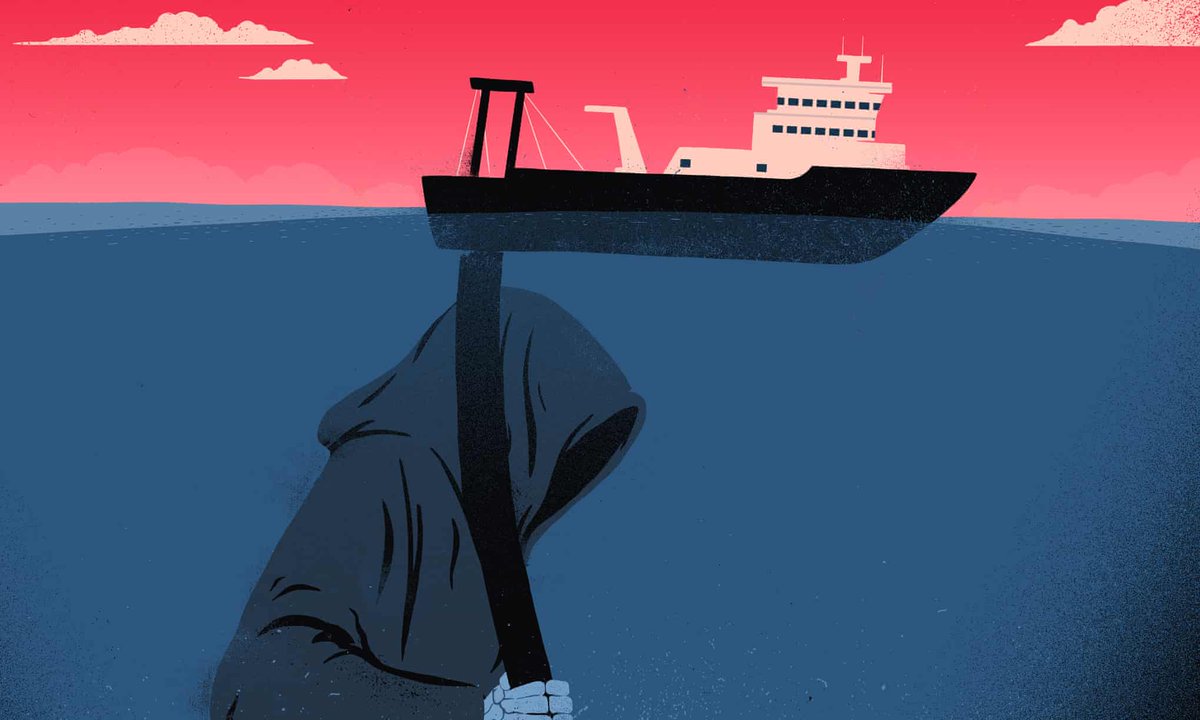
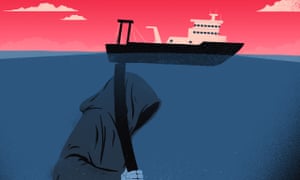
Illustration by Sébastien Thibault


It is the most important news humanity has ever received: the general collapse of life on Earth. The vast international assessment of the state of nature, as revealed on Monday, tells us that the living planet is in a death spiral. Yet it’s hardly surprising that it appeared on few front pages of British newspapers. Of all the varieties of media bias, the deepest is the bias against relevance. The more important the issue, the less it is discussed. 


Human society under urgent threat from loss of Earth's natural life


There’s a reason for this. Were we to become fully aware of our predicament, we would demand systemic change. Systemic change is highly threatening to those who own the media. So they distract us with such baubles as a royal baby and a vicious dispute between neighbours about a patio. I am often told we get the media we deserve. We do not. We get the media its billionaire owners demand.

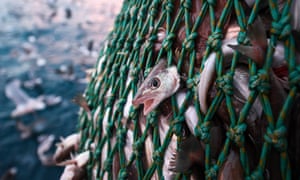
This means that the first duty of a journalist is to cover neglected issues. So I want to direct you to the 70% of the planet that was sidelined even in the sparse coverage of the new report: the seas. Here, life is collapsing even faster than on land. The main cause, the UN biodiversity report makes clear, is not plastic. It is not pollution, not climate breakdown, not even the acidification of the ocean. It is fishing. Because commercial fishing is the most important factor, this is the one we talk about least. The BBC’s recent Blue Planet Live series, carefully avoiding any collision with powerful interests, epitomised this reticence. There was not a word about the fossil fuel or plastics industries – and only a fleeting reference to the fishing industry, which is protected by a combination of brute power and bucolic fantasy.

When you hear the word fisherman, what picture comes to mind? Someone who looks like Captain Birdseye: white beard, twinkly eyes, sitting on a little red boat chugging merrily across a sparkling sea? If so, your image of the industry might need updating. An investigation by Greenpeace last year revealed that 29% of the UK’s fishing quota is owned by five families, all of whom feature on the Sunday Times Rich List. A single Dutch multinational, operating a vast fishing ship, holds a further 24% of the English quota. The smallest boats – less than 10 metres long – comprise 79% of the fleet, but are entitled to catch just 2% of the fish.


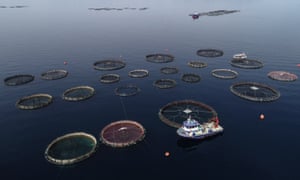
‘Fish farming has even greater impacts, as fish and prawns are often fed on entire marine ecosystems: indiscriminate trawlers dredge up everything and mash it into fishmeal.’ Photograph: Anadolu Agency/Getty Images


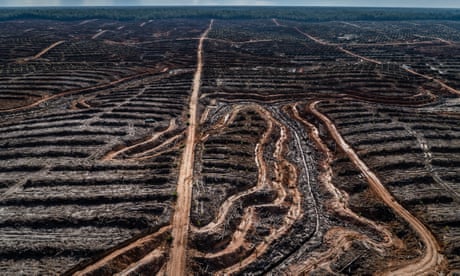
The same applies worldwide: huge ships from rich nations mop up the fishsurrounding poor nations, depriving hundreds of millions of their major source of protein, while wiping out sharks, tuna, turtles, albatrosses, dolphins and much of the rest of the life of the seas. Coastal fish farming has even greater impacts, as fish and prawns are often fed on entire marine ecosystems: indiscriminate trawlers dredge up everything and mash it into fishmeal. 


Sign up to the Green Light email to get the planet's most important stories

Read more

The high seas – in other words, the oceans beyond the 200-mile national limits – are a lawless realm. Here fishing ships put out lines of hooks up to 75 miles long, which sweep the sea clean of predators and any other animals that encounter them. But even inshore fisheries are disastrously managed, through a combination of lax rules and a catastrophic failure to enforce them.

For a few years, the populations of cod and mackerel around the UK started to recover. We were told we could start eating them again with a clear conscience. Both are now plummeting. Young cod are being illegally discarded (tipped overboard) on an industrial scale, with the result that the legal catch in UK seas is probably being exceeded by roughly one-third. Mackerel in these waters, thanks to the scarcely regulated greed of the fishery, lost its eco label a few weeks ago.

The government claims that 36% of England’s waters are “safeguarded as marine protected areas” (MPAs). But this protection amounts to nothing but lines on the map. Commercial fishing is excluded from less than 0.1% of these fake reserves. A recent paper in the Science journal found that the trawling intensity in European protected areas is higher than in unprotected places. These MPAs are a total farce: their only purpose is to con the public into believing that something is being done.

‘An investigation by Greenpeace last year revealed that 29% of the UK’s fishing quota is owned by five families, all of whom feature on the Sunday Times Rich List.’ Photograph: Jeff J Mitchell/Getty Images
Advertisement


You might have hoped, in view of the European Union’s failures, that Brexit would provide an opportunity to do things better. It does, but it is not being taken. On the contrary, while the EU will introduce a legal commitment to prevent any fish species from being exploited beyond its replacement rate next year, the UK’s fisheries bill contains no such safeguard. There are no plans to turn our “protected areas” into, er, protected areas. The looting of our seas is likely, if anything, to intensify.

What makes all this so frustrating is that regulating the fishing industry is both cheap and easy. If commercial fishing were excluded from large areas of the sea, the total catch would be likely, paradoxically, to rise, due to what biologists call the spillover effect. Fish and shellfish breed and grow to large sizes in the reserves, then spill over into surrounding waters. Where seas have been protected in other parts of the world, catches have grown dramatically. As a paper in the journal PLOS Biology shows, even if fishing was banned across the entire high seas – as it should be – the world’s fish catch would rise, as the growing populations would migrate into national waters.

Only rebellion will prevent an ecological apocalypse
George Monbiot


Read more

Nor are the rules difficult to enforce. As the World Wide Fund for Nature has shown, fitting every boat over 10 metres that fishes in UK waters with remote monitoring equipment would cost just £5m. Cameras and sensors would record what the boats catch and where, making illegal fishing impossible. But fitting this equipment is voluntary. In other words, it is mandatory to comply with the law to prevent discards, over-quota fishing and fishing in no-take zones, but it is voluntary to fit the equipment that shows whether or not you are complying with the law. Unsurprisingly, fewer than 1% of vessels have agreed to carry the equipment. Given the vast profits to be made by cutting corners, is it any wonder that this industry keeps driving fish populations – and the living systems they support – into collapse?

There are almost no fish or shellfish we can safely eat. Recent scandals suggest that even the Marine Stewardship Council label, which is supposed to reassure us about the fish we buy, is no guarantee of sound practice. For example, the council certified tuna fisheries in which endangered sharks had been caught and finned; and, in UK waters, it has approved scallop dredgingthat rips the seabed to shreds.

Until fishing is properly regulated and contained, we should withdraw our consent. Save your plastic bags by all means, but if you really want to make a difference, stop eating fish.

• The Guardian aims to publish recipes for sustainable fish. For ratings in your region, check: UK; Australia; US.

• George Monbiot is a Guardian columnist


As the crisis escalates…

… in our natural world, we refuse to turn away from the climate catastrophe and species extinction. For The Guardian, reporting on the environment is a priority. We give reporting on climate, nature and pollution the prominence it deserves, stories which often go unreported by others in the media. At this pivotal time for our species and our planet, we are determined to inform readers about threats, consequences and solutions based on scientific facts, not political prejudice or business interests.

More people are reading and supporting The Guardian’s independent, investigative journalism than ever before. And unlike many new organisations, we have chosen an approach that allows us to keep our journalism accessible to all, regardless of where they live or what they can afford. But we need your ongoing support to keep working as we do.

The Guardian will engage with the most critical issues of our time – from the escalating climate catastrophe to widespread inequality to the influence of big tech on our lives. At a time when factual information is a necessity, we believe that each of us, around the world, deserves access to accurate reporting with integrity at its heart.

Our editorial independence means we set our own agenda and voice our own opinions. Guardian journalism is free from commercial and political bias and not influenced by billionaire owners or shareholders. This means we can give a voice to those less heard, explore where others turn away, and rigorously challenge those in power.

We need your support to keep delivering quality journalism, to maintain our openness and to protect our precious independence. Every reader contribution, big or small, is so valuable. Support The Guardian from as little as CA$1 – and it only takes a minute. Thank you.
Support The Guardian


Topics

Fishing
Opinion


Link: https://www.theguardian.com/commentisfree/2019/may/09/seas-stop-eating-fish-fishing-industry-government?CMP=share_btn_tw

Wednesday, June 12, 2019

Baby Bear Gets Head Stuck in Bucket | The Dodo


Baby Bear Gets Head Stuck in Bucket

This bear had a bucket stuck on his head — and it took a whole crew to help him get it off.


Friday, June 7, 2019

Nile is running dry


The lifeblood of Egypt is running dry

The clock strikes five on a hot and dry fall morning when 60-something Ali al-Faqi makes his way through the darkness to meet up with four other farmers at the mosque of his Nile Delta village. By the dim glow of the flickering streetlights, the anxious group sets off on the mile-long trek to their fields just north of Cairo. Holding their breath, they peer into the 8-foot-deep irrigat
“The water situation in Egypt is critical,” said Minister of Water Resources and Irrigation Mohamed Abdel Ati. “We have reached a point where the available water quantities set the limits for economic development. We have become one of the driest countries in the world.”
Reporter Ayah Aman joins Al-Monitor's Off The Hookah podcast to talk about her experience reporting this story.


Egyptian civilization emerged more than 5,000 years ago as heavy summer rains in the highlands of East Africa carried vast amounts of high-quality silt to the lower reaches of the Nile. The resulting soil proved particularly fertile, giving birth to a lush green ribbon that snakes through some of the world's driest lands. In a country that receives less than 8 inches of rain along the coast — and almost none at all south of Cairo — the Nile continues to fulfill 90% of Egypt's water needs.
But surging population growth along the Nile compounded by the devastating impact of climate change threatens disaster as more and more people compete for a dwindling resource. Today, Egypt faces an annual water deficit of more than 20 billion cubic meters (5.3 trillion gallons). That's the difference between the amount of water that people, crops and industry need and what’s available from the Nile in addition to limited quantities of groundwater, treated wastewater and desalinated water.

Despite being a national priority, the agricultural sector is one of the hardest-hit victims as Egypt runs out of water. 


Monday, May 27, 2019

The nautilus is endangered


The weird and mysterious nautilus is a cephalopod, just like octopuses, squids, and cuttlefish.

But how similar are these shelled critters to their relatives?

Curator and paleontologist Neil Landman gives seven ways that the nautilus is unique among its evolutionary neighbors. #CephalopodWeek #Nautilus #Squid #Explainer #DeepSea #OceanLife *** Subscribe to our channel: http://www.youtube.com/user/AMNHorg?s... Check out our full video catalog: http://www.youtube.com/user/AMNHorg Facebook: ‪http://fb.com/naturalhistory ‬‬‬‬‬‬‬‬‬‬‬‬‬‬ Twitter: ‪http://twitter.com/amnh ‬‬‬‬‬‬‬‬‬‬‬‬‬‬ Tumblr: ‪http://amnhnyc.tumblr.com/‬‬‬‬‬‬‬‬‬‬‬‬‬‬ Instagram: ‪http://instagram.com/amnh‬‬‬‬‬‬‬‬‬‬‬‬‬‬ This video and all media incorporated herein (including text, images, and audio) are the property of the American Museum of Natural History or its licensors, all rights reserved. The Museum has made this video available for your personal, educational use. You may not use this video, or any part of it, for commercial purposes, nor may you reproduce, distribute, publish, prepare derivative works from, or publicly display it without the prior written consent of the Museum.
© American Museum of Natural History, New York, NY


 @oceana

The chambered nautilus has been around longer than TREES, but this species is on the brink of extinction because of the shell trade. 


Add your name to #StopExtinction: https://bit.ly/2YMblGU 

About Oceana


Oceana is the largest international advocacy organization dedicated solely to ocean conservation. 

With more than 200 victories that stop over-fishing, habitat destruction, pollution and killing of threatened species like turtles and sharks, Oceana’s campaigns are delivering results. 


Visit www.oceana.org to learn more.


Saturday, May 25, 2019

David Attenborough is pessimistic about the future of wildlife on earth.


David Attenborough, the voice of Our Planet: 


“Things are going to get worse”

The voice of some of the most stunning nature documentaries ever made is pessimistic about the future of wildlife on earth.


By Brian Resnick

Apr 22, 2019

“Unless we act within the next 10 years, we are in real trouble.” 
David Attenborough 
Shannon Finney/Getty Images


David Attenborough is the most famous nature storyteller on television. 

The 92-year-old producer, narrator, and documentarian essentially invented the genre of television nature documentaries in his decades-long career at the BBC. 

Programs like Life on Earth, Blue Planet, and Planet Earth have focused on the wonderful grandness and diversity of life on earth, conjuring up images of a world that is seemingly untouched by humans. 

But these also, at times, skirted around the ecological crises threatening life on the planet — which are caused by humans.

Now, Attenborough is coming into a slightly different role: 
advocate for fleeting biodiversity and ecosystems.

His latest venture is narrating the Netflix documentary Our Planet, which injects wildlife conservation advocacy into every episode much more deliberately than previous series. 

The producers hope to reach a billion people with the series and its accompanying website, with the goal of educating people about the natural world. 

And they’ve sent Attenborough on a press tour that includes advocating on behalf of disappearing wildlife and ecosystems at institutions like the World Bank and the International Monetary Fund

Attenborough has also recently lent his voice to a BBC documentary called 
Climate Change: The Facts, which explains the science and grim statistics fueling the climate change threat.

“I find it hard to exaggerate the peril,” Attenborough said at the IMF earlier in April, according to the Guardian

“This is the new extinction and we are half way through it." 

"We are in terrible, terrible trouble and the longer we wait to do something about it the worse it is going to get.”


"Things are going to get worse. The question is how much worse, and how quickly is it going to get worse. The speed is accelerating." 

"Whatever we do now, it’s going to get worse. And unless we act within the next 10 years, I mean, we are in real trouble."