How to be a responsible steward of Democracy, Human Rights Capitalism and Planet Earth.


HOW TO BE A RESPONSIBLE STEWARD OF PLANET EARTH


Creating a better world for all through social media activism

Friday, February 28, 2014

Vanishing animals


Vanishing Animals

 Vanishing animals

Barbara Franco, Gianfranco Bologna, Simona Giordano, World Wildlife Fund
White Star Publishers, Oct 14, 2008 - Nature - 304 pages
 

A poignant chronicling of the vulnerability of the animal life supported by the world’s diverse habitats, this important book presents an overview of the principal animal species that are threatened with extinction. 


For each species, it presents the challenges involved in conservation and explores the actions WWF is taking in the field. 

Above all, it examines the connection between the protection of a certain species and the survival of the local populations. 

The animal species on which this book focuses are among the rarest in the world—and the best known to many of us for exactly that reason. 

The authors also examine less familiar species of equally high biological significance. Each chapter focuses on projects dedicated to the conservation of that species in different locations around the world. 

Among the animals highlighted are the African elephant—with particular attention paid to the extreme environment of Chad—the aye-aye of Madagascar, the short-tailed chinchilla of South America, and the bird of paradise of Papua New Guinea. 

Accompanying the insightful text of this meaningful book are hundreds of magnificent photographs that convey the unique qualities of each of the species featured. 

A wake-up call we can’t ignore, this volume demonstrates the severity of the plight of our endangered species and is a testimony to the good work being done to salvage this very serious situation.


Tuesday, February 11, 2014

Drones In Agriculture


Contributor
I write about technology, business, and Silicon Valley trends full bio →


Tech

Growing The Use Of Drones In Agriculture


Although news coverage around them is mostly focused on use in military operations, drones can be used across multiple industries. Using diverse payloads, ranging from GoPro cameras to professional cameras, drones can be used to perform a variety of tasks, ranging from reconnaissance missions in the military to, possibly, delivering pizza.

According to a study by the Association for Unmanned Vehicle Systems International (AUVSI), the drone, or UAV, industry in the U.S. could produce up to 100,000 new jobs and add $82 billion in economic activity between 2015 and 2025. Those numbers are pretty significant. However, the industry has a bit of a trek to get to them.

This is because privacy concerns balance the case for drone use.  A majority of countries in the world today use a loose set of guidelines to govern drone use.  A notable exception is Japan, which uses drones extensively for agriculture purposes.
With regulation governing drone use up for discussion in 2015, the United States could soon follow Japan’s lead.

About three weeks ago, I visited 3D Robotics, a startup that manufactures drones. As I mentioned earlier, commercial use of drones is limited in the States. As a result, approximately fifty percent of the startup’s customers are located outside the States.

According to Sue Rosenstock, 3D Robotics spokesperson, a third of their customers consist of hobbyists, another third of enterprise users, and a third use their drones as consumer tools. “Over time, we expect that to change as we make more enterprise-focused products, such as mapping applications,” she explains.

Started by former Wired editor Chris Anderson, 3D Robotics is an end-to-end solutions startup. It’s operations are spread across Berkeley (where Anderson is based), San Diego, and Tijuana in Mexico. It is vertically integrated (just like Apple ) and manufactures its own hardware and software. While vertical integration increases upfront development costs, it offers greater control for the company to market its products to specific industries, such as agriculture.

Drones In Agriculture

3D Robotics is already conducting tests with farmers to understand user needs and test custom drones for agriculture. “Our approach is to make a product that fits into a farmer’s actual equipment,” says Brandon Basso, lead researcher at 3D Robotics. “We want them to use drones the same way that they use their other farming equipment.”
In the absence of data regarding use of drones in agriculture, 3D Robotics is working off educated guesses and formulating use cases. These guesses break down typical cost structures for farming to incentivize farmers to use drones.

Brandon Basso
Brandon Basso

As an example, Basso says farmers spray pesticides uniformly over their crop to protect them from fungal infections. “It is not environmentally great or financially great,” says Basso. According to him, the use of drones can mitigate some of these drawbacks. For example, farmers can choose to not spray pesticides based on an aerial survey of their crop using drones. Alternately, they can selectively spray pesticides only on plants that need attention, thus minimizing environmental damage and saving money.

Drones, which are fitted with payloads such as cameras, enable farmers to get a bird’s eye-view of their crop by flying at low altitudes. Using Infra-red imaging, drones can also detect which plants are sick and which ones are healthy. Basso says healthy plants reflect more infrared radiation, as opposed to plants which have fungal infections.
3D Robotics has deconstructed its tests into a series of stages that are closely linked to an actual drone operation.

During the Mission Planning stage, Basso and his team discuss objectives and goals of a particular flight mission. Subsequently, they spend time drawing out an automated flight path for the mission. This path enables them to map out the best coverage area for the flight. Flight times for drones can vary from less than ten minutes to approximately forty minutes flight time. This time is a function of payloads and rotors used in that particular drone. Basso says drones used for agricultural purposes have a longer flight time but are unable to carry much load. Images and data are processed using imaging software once drones return to their original takeoff point.

Pablo Lema, Sales Director, 3D Robotics

Pablo Lema, Sales Director, flies Iris, the latest quadcopter from 3D Robotics
However, drones are, as yet, a fairly technical affair. While their operations have been simplified, data crunching and imaging processing from drones still require technical knowledge. As such, 3D Robotics is not selling its drones directly to farmers. Instead, the startup sells drones to crop analysts, who recommend them to farmers.

Privacy And Drones
As I mentioned earlier, drone use has come under increased scrutiny due to privacy concerns. The agriculture industry is no different. A majority of farms still rely on a number of manual methods for crop care. Licenses for drones are granted on a case by case basis. In the meanwhile, plans to grant access to US skies for drones by September 2015 are already delayed.

However, Rosenstock is not worried. “I would be surprised if there wasn’t distrust of new technology,” she says, adding that they (3D Robotics) are tech innovators and not police. “We leave regulation to the legislators,” she says.

Frackers: Billionaire Wildcatters


The Frackers: The Outrageous Inside Story of the New Billionaire Wildcatters
Gregory Zuckerman of the Wall Street Journal

Moderated by Joel Kurtzman of the Milken Institute

February 6, 2014
4:30 p.m.-6:00 p.m.
Santa Monica

For decades, they operated on the fringes of the energy industry. Now the unlikely wildcatters who perfected fracking have moved from the fringes to the forefront of a revolution that has turned the United States into the world's fastest-growing energy power.

At this Milken Institute Forum, Gregory Zuckerman, a senior writer for the Wall Street Journal and the author of "The Frackers: The Outrageous Inside Story of the New Billionaire Wildcatters," will tell the dramatic tale of the ambitious and headstrong wildcatters who were determined to tap the massive deposits of oil and gas that the industry's giants had dismissed as a waste of time.

Their success with hydraulic fracturing--known as fracking--through extremely dense shale has transformed the U.S. energy landscape. Once dependent on imported energy, the U.S. is expected to pass Saudi Arabia and Russia to become the world's largest oil producer. The wildcatters' success has transformed their personal lives as well. Like the Rockefellers and the Gettys before them, they're using their newfound wealth and power to influence politics, education, entertainment, sports, and many other fields. The revolution the frackers are responsible for has transformed the U.S. economy, raised environmental concerns, and upended global geopolitics. In some ways, their impact is just beginning.


  • License - Standard YouTube License


Book: The Frackers: The Outrageous Inside Story of the New Billionaire Wildcatters

Link: http://youtu.be/eWtkN44G9gM


Thursday, November 14, 2013

U.S. Fish and Game Destroy Contraband Ivory

Is Destroying Contraband Items, the Best Way to Control Illegal Poaching

By Clayton Sandell
Nov 14, 2013 9:22am

Today near Denver, the U.S. Fish and Wildlife Service will do something it says it has never done before: destroy six tons of ivory to highlight a booming illegal trade contributing to the slaughter of tens of thousands of elephants every year.

“We’re trying to tell organized syndicates and cartels who are now involved in the illegal ivory trade that we’re going to do whatever we can to take the value out of ivory and do whatever we can to put them in jail,” said Edward Grace, deputy chief with the U.S. Fish and Wildlife Service Office of Law Enforcement.

Elephant poaching is at its highest level in decades, killing an estimated 30,000 animals every year, according to the World Wildlife Fund. The WWF says the illegal ivory trade is valued between $7.8 billion and $10 billion every year.

“Blood ivory” may even be fueling terrorist activity. In a September report, the Office of the Director of National Intelligence said growing demand along with a limited supply is making ivory increasingly lucrative.

“Criminal elements of all kinds, including some terrorist entities and rogue security personnel, often in collusion with government officials in source countries are involved in poaching and movement of ivory and rhino horn across east, central, and southern Africa,” the report said.
Since a global ban was enacted in 1989, ivory seized by U.S. authorities has been piling up at a federal warehouse called the National Wildlife Property Repository near Commerce City, Colo. On Wednesday, federal officials and wildlife agents showed off a massive collection of elephant tusks, carvings and jewelry. Some of the tusks are small, a sign that poachers are killing both adult elephants and their babies.

“That tells you that poachers are indiscriminate,” Crawford Allan told ABC News.
“Poachers don’t care whether it’s a young or old animal,” said Allan, who monitors illegal animal trading for the World Wildlife Fund. “They are wiping out entire families.”
This afternoon officials will move the ivory stockpile outside to a giant blue industrial rock crusher, where it will be pulverized into millions of worthless pieces. Officials say the crushed ivory will likely be donated to a museum as part of a future exhibit.

The National Wildlife Property Repository is a veritable chamber of animal horrors, containing row after row of illegal products seized during criminal investigations, at border crossings and ports of entry. Shelves are lined with purses made from alligators, countless bear and tiger pelts (even a stuffed tiger embryo) and furniture made from turtle shells.
The Unites States and Asia are largely driving the demand in ivory, experts and federal officials say. China, Malaysia, the Philippines, Thailand and Vietnam are a few of the worst ivory-trade offenders, according to the Convention on the International Trade of Endangered Species.

Critics argue the “ivory crush”-like earlier events in Gabon, Kenya and the Philippines- will do little to stem the illegal ivory trade. Michael ‘t Sas-Rolfes, a conservation economist with the Property and Environmental Research Center, warns today’s crush could have unintended consequences.

“The ill-conceived [U.S. Fish and Wildlife] gesture could create the perception that ivory is an increasingly scarce commodity on illegal markets, leading to higher prices and further poaching,” he said.

The U.S. Fish and Wildlife Service disagrees.
“This ivory would never be made available to the market,” the agency said in a statement. “Its destruction has no impact on the overall supply and does not create any incentive for poaching. By demonstrating our commitment to combat poaching and illegal trade, and to arrest and prosecute people who engage in these activities, we are providing a strong disincentive to poachers and wildlife traffickers.”

In July, President Obama signed an executive order forming a cabinet-level task force to combat the illegal wildlife trade, pledging $10 million to tackle poaching in Africa.
“We’re sending a strong message out both to people who buy and trade illegal ivory to say ‘we aren’t going to tolerate this anymore’,” Allan said.
ABC blood ivory jtm 131114 US Staging Ivory Crush to Battle Illegal Trade
The U.S. Fish and Wildlife Service will destroy six tons of ivory to highlight the illegal trade.Credit: Clayton Sandell/ABC News

Wednesday, October 9, 2013

Robert C. Stebbins, Chronicler of Western Reptiles and Amphibians, Dies at 98 - NYTimes.com


The New York Times


October 7, 2013


Robert C. Stebbins, Chronicler of Western Reptiles and Amphibians, Dies at 98


Robert C. Stebbins, who was considered by many to be the pre-eminent authority on the lungless salamander, the barking tree frog, the northern Pacific rattlesnake and hundreds of other amphibians and reptiles of the North American West, died on Sept. 23 in Eugene, Ore. He was 98.
His death was announced by the University of California, Berkeley, where he was a professor emeritus of zoology.
Professor Stebbins, a biologist who published his first book in 1951 and his last in 2012, was equally renowned as an illustrator, conservationist and advocate for the study of biology the old-fashioned way — by going outside and observing it. He was described by colleagues as a modern scientist with the heart of a 19th-century naturalist.
His best-known book, “A Field Guide to Western Reptiles and Amphibians,” first published in 1966 and still considered the bible of the field, was illustrated with painstakingly detailed drawings he made during long treks in mountain and desert habitats at a time when most biologists were moving their research into the laboratory.
He had no quarrel with laboratory research. “The importance of studies at the level of molecules and cells is unquestioned,” he wrote in the preface to “A Natural History of Amphibians,” a 1997 book. “But it is equally important to study life at the other end of the spectrum of biological organization — whole organisms and their interactions in nature.”
The sudden decline of amphibian and reptile populations worldwide, beginning in the 1980s and ’90s, made it especially urgent “to obtain direct, on-site knowledge of what is going on,” he said.
Professor Stebbins’s 1966 field guide — written in longhand and typed by his wife, Annarose — filled a large gap in zoological research, said Joseph Mendelson, curator of herpetology at the Atlanta Zoo and a past president of the Society for the Study of Amphibians and Reptiles. There had been field guides for amphibians and reptiles of the United States, he said, but none that gave more than cursory treatment to the hundreds of species specific to the North American West, defined as encompassing 11 states plus the Canadian provinces of Saskatchewan, Alberta and British Columbia.
Today a dog-eared, water-stained “Stebbins,” as it came to be called, is an indispensable tool in a herpetologist’s field pack, Mr. Mendelson said. “There is no herpetologist anywhere, at any level — amateur or scientist,” he said, “who does not refer to that field guide on a daily basis.”
Professor Stebbins became an active environmentalist in the 1970s after he noticed dune buggies and other off-road vehicles bouncing through the desert, destroying the surface crust that protects amphibians and reptiles and the vegetation they live on.
With support from the Sierra Club, he and a group of colleagues took on the recreational vehicle industry in a decade-long campaign to restrict the vehicles’ access to desert land. In California, their effort helped to establish limited protections in the East Mojave National Scenic Area and to elevate the Joshua Tree and Death Valley national monuments to fully protected national park status.
Professor Stebbins said he became convinced that the greatest threat facing the environment was human estrangement from nature. He proposed expanding science education beyond biology, chemistry, physics and the behavioral sciences to include the formal study of “natural history,” which he defined as the interaction of all of the above in the struggle of life on earth.
“To paraphrase George Gaylord Simpson,” he wrote in 1997, referring to the American paleontologist, “knowing all there is to know about a lion’s molecules and cells will not tell you why a lion roars.”
Robert Cyril Stebbins was born on March 31, 1915, in the Northern California town of Chico, where his parents, Cyril and Louise, farmed fruit and nuts and raised horses and sheep. His mother was an artist in her spare time. His father taught agricultural and nature studies at the Chico State Normal School for Teachers.
Professor Stebbins received his bachelor’s, master’s and Ph.D degrees in biology from the University of California, Los Angeles. He centered his doctoral thesis — and much of his early work — on the Ensatina salamander, a genus found in the Western coastal mountains. He found its many species and subspecies useful in documenting speciation, the process by which one species evolves into another.
In 1945 he was named an assistant professor of zoology, and the first curator of herpetology at the Museum of Vertebrate Zoology at Berkeley, where he remained throughout his career.
Professor Stebbins is survived by his wife; a son, John; two daughters, Melinda Broadhurst and Mary Stebbins; a sister, Rosalie Darling; 6 grandchildren; and 10 great-grandchildren.
“Anyone can begin the steps toward a more nature-centered worldview,” he wrote in one of his last books,“Connecting With Nature: A Naturalist’s Perspective” (2009), which was equal parts memoir, guidebook and practical guide to helping children of the touch-screen era see the “insects in the leaves” and the “mushrooms in the lawn.” First, of course, he said, they should be encouraged to go outside.


Robert C. Stebbins, Chronicler of Western Reptiles and Amphibians, Dies at 98 - NYTimes.com

Link: http://www.nytimes.com/2013/10/08/us/robert-c-stebbins-chronicler-of-western-reptiles-and-amphibians-dies-at-98.html?nl=todaysheadlines&emc=edit_th_20131008&_r=0


Tuesday, October 1, 2013

Immediate action needed to reduce 269 million bird deaths in Canada


Immediate action needed to reduce 269 million bird deaths in Canada, nature groups say


Paul Jorgenson
5:42 AM (10 hours ago)

to Nature
FOR IMMEDIATE RELEASE

Immediate action needed to reduce 269 million bird deaths in Canada, nature groups say

OTTAWA (October 1, 2013) — In the wake of shocking new research published today in collaboration with the federal government, nature conservation groups, including Nature Canada, are calling on both individuals and governments alike to act now to help stop millions of bird deaths each year.

The new research published today finds that a staggering 269 million birds are killed every year as a direct result of human-related activities. The research suggests that about 90% of the 269 million birds killed fall under the protection of the Migratory Birds Convention Act and that the major causes of death include feral and pet cats, agriculture, oil and gas activities, and collisions with buildings.

Under the Migratory Birds Convention Act and as a signatory to the Migratory Bird Treaty, the federal government has an obligation to conserve migratory bird populations in Canada.

“We are deeply troubled by the disquieting research published today on the number of birds killed every year in Canada due to human-related activities,” said Ian Davidson, Executive Director of Nature Canada. “Fortunately, there are concrete and sensible ways that people and governments can prevent the needless death of birds, especially now during the migratory season.”

Nature Canada is calling on municipal and other governments to adopt a variety of sensible measures to mitigate these needless deaths. These measures include demanding better building standards from developers; muting reflective surfaces by angling glass or adding awnings or overhangs; and putting legislation in place to cut down on the wasteful practice common in some office buildings of leaving lights on overnight.

“It’s important that better building standards, including measures to prevent bird deaths, are adopted and enforced by cities across Canada”, said Caroline Schultz, Executive Director of Ontario Nature. “These can be really common sense measures like muting reflections in windows, reducing light pollution or providing visual markers.”

Nature Canada emphasizes that individual Canadians can also help cut down on the number of birds killed every year by adopting some sensible measures. “As simple as it sounds, one of the best things Canadians can do is really just to keep your cat indoors, especially around dawn and dusk,” said Alexander MacDonald, Manager of Protected Areas for Nature Canada. MacDonald also stresses that feral cats are an especially acute threat.  “Bob Barker really was right: we should help control the pet population and have our pets spayed or neutered.”

About Nature Canada:

Nature Canada is the oldest and largest grassroots nature conservation non-profit organization in Canada. As a co-partner in BirdLife International, Nature Canada is also the largest conservation advocacy group in the country with a special focus of advocating on behalf of birds.
In 2013, Nature Canada was named as one of Canada’s top environmental charities by Charity Intelligence.
Related links:


In-depth: Nature Canada’s common sense proposals to prevent needless bird deaths
(HTML url forthcoming)
For more information or to arrange interviews, please contact:
Paul Jorgenson, Senior Communications Manager, 613-562-3447 ext. 248, pjorgenson@naturecanada.ca
Monica Tanaka, Communications Coordinator, 613-562-3447 ext 241, mtanaka@naturecanada.ca


Paul Jorgenson
Senior Communications Manager
Gestionnaire principal des communications

pjorgenson@naturecanada.ca
613-562-3447 ext. 248 | 1-800-267-4088
300-75 Albert Street, Ottawa, ON K1P 5E7
P  Please consider the environment before printing this email


Monday, August 19, 2013

FRACKING: Shattered Ground


SATURDAY AUGUST 17 AT 5 PM ON CBC-TV


FRACKING:

“Fracking”, or Hydraulic Fracturing, is a new technology that has opened up immense resources of natural gas buried in deep shale beds. 

The process involves injection of highly-pressurized water, sand and chemicals to shatter underground layers of shale and extract previously inaccessible natural gas. 

But the process and its sudden spread across the North American landscape, has become an incredibly divisive issue, ripping apart communities and even families. The backlash to the gas industry is unprecedented, with some countries, Canadian provinces and American states adopting fracking bans and moratoriums.


As SHATTERED GROUND reveals, some see fracking as a great opportunity for money and jobs, and one that provides cheap, clean fuel. But, for others, the possible human health costs of this new drilling technology have motivated a large and vociferous anti-fracking movement.

The debate over fracking has been echoed in the Oscar-nominated documentary Gasland and inPromised Land, the new Gus van Sant’s feature film starring Matt Damon. Fracking’s critics consider the industry a potential environmental disaster, citing chemical contamination of air and water. With pipelines proposed, terminals for liquefied natural gas (LNG) requiring billions of dollars of investment, and huge shale beds lying underneath highly-populated areas of the Canada and the US (including southern Ontario and the GTA), fracking is an issue that could affect every one of us.

Must there be a choice between health and wealth, or is it possible to find a balance? The gulf between proponents and opponents appears so wide, it’s difficult to find common ground. 

Travelling from the northern gas fields in Canada to the rancorous political battles and hot beds of shale gas activity in the US, SHATTERED GROUND looks at the people who benefit, and those who do not. The film gathers the new scientific data that is only now beginning to clarify a complex issue, and the health risks involved.

With fracking’s gigantic appetite for water – water permanently removed from the eco-system – what’s at stake may not just be about our supply of natural gas but the one resource none of us can live without: fresh water.

“Fracking is one of the ‘hot button’ issues of our time”, says SHATTERED GROUND director Leif Kaldor. “There are very strong opinions on both sides of the issue, and very little middle ground. We felt there was a need for a film that would give people a clear understanding of the process, the latest science, and how fracking is playing out on the ground, so they’d be better able to make up their own minds.”

SHATTERED GROUND is directed by Leif Kaldor, produced by Leslea Mair, and written by Leslea Mair and Leif Kaldor for Zoot Pictures in association with CBC-TV's The Nature of Things.


Tuesday, August 13, 2013

Wild Koala seeking shelter from extreme heat shown kindness (PHOTOS) » DogHeirs | Where Dogs Are Family « Keywords: koala, heat, Australia

koala rescued


koala rescued from extreme heat


koala rescued from extreme heat


Koala cools off from heat

When a Koala needed refuge from the extreme heat, a family showed the wild animal some kindness after it wandered into their home. The following photos from Imgur were captioned as follows: "120°F (about 49°C). A Koala entered someone’s house, looking for water and shade, and here’s what happened when the owner gave him something to drink."


Read more at http://www.dogheirs.com/misst/posts/3764-wild-koala-seeking-shelter-from-extreme-heat-shown-kindness-photos#SODwdJf5WwxbX8YB.99

Wild Koala seeking shelter from extreme heat shown kindness (PHOTOS) »

Link: http://www.dogheirs.com/misst/posts/3764-wild-koala-seeking-shelter-from-extreme-heat-shown-kindness-photos


Threats to Sharks Destabilize Entire Ecosystems

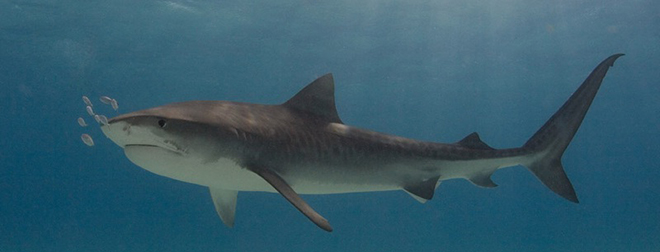
Shark swimmingImage: Flickr/Willy Volk


If sharks disappeared from seas, what would be so terrible, you ask? 

Here's what: 


Threats to Sharks Destabilize Entire Ecosystems

Fear of tiger sharks, for instance, helps protect seagrass from being over-grazed, which in turns pulls CO2 out of the atmosphere and provides a habitat for fish and shellfish

By Michael Heithaus and Inside Science Minds Guest Columnist


(ISM) -- Throughout most of the world sharks are in trouble. Big trouble. In some areas, with adequate management, shark populations have stabilized, but likely at levels far below what they were decades ago. In the rest of the world, shark fishing continues to be a major threat to many species. 
Recent estimates suggest that around 100 million sharks are taken by fisheries every year. 
Because of their slow growth – sharks may take a decade or more to reach maturity – and low rate of reproduction – many species have fewer than a dozen young a year – this rate of catches is unsustainable. The decline of sharks will continue.
Why should we care? What will that mean for the oceans and even for fisheries targeting species other than sharks? We know from studies on land that when large predators are removed, entire ecosystems can be destabilized. That can be bad for animals and people. If similar things happen in the oceans, we not only need to think about halting declines of sharks, we will probably need to find ways to rebuild their numbers.
The attention that the Discovery Channel's Shark Week brings to these animals is great, but that attention needs to extend beyond the first week of August for these predators and the places they live to recover and eventually thrive.

For the past fifteen years, my colleagues and I have been trying to figure out how important tiger sharks are in the aptly named Shark Bay, Western Australia. Why travel halfway around the world? Quite simply, to study sharks in a place where their ecosystem is relatively untouched. Also, because Shark Bay features some of the world’s largest seagrass beds. Seagrass is important because it provides a habitat that supports populations of fish and shellfish that people rely on. It also helps to combat climate change by pulling carbon dioxide out of the atmosphere. By working in Shark Bay we can understand the role of sharks and what might happen to Shark Bay and its seagrass if tiger sharks were to disappear. It also lets us predict what might happen in other places where sharks have been overfished.
In Shark Bay, we have worked not only on sharks, but on their prey — including dolphins, sea turtles and sea cows — as well as the wider ecosystem. Our findings demonstrate that tiger sharks are critical to the Shark Bay ecosystem. But not in the way you might think. It turns out that the fear of sharks – by the sea cows and sea turtles that eat the seagrass – helps protect the seagrass from being over-grazed.  
Here is how it works: Tiger sharks like to hunt in shallow waters in the bay; a perfect place for seagrass to grow. To avoid becoming a shark snack, turtles and sea cows generally avoid these areas. The seagrass can grow into a lush habitat that provides shelter for small fish and shellfish that will grow up into species people want to catch. In areas that sharks don’t frequent, seagrass is heavily grazed and does not support big populations of fish and shellfish. That means that if we were to lose tiger sharks from the bay, the seagrass likely would be grazed down all over.
The loss of seagrass would be bad news for fish and fishermen – and maybe even for turtles and sea cows! It also could result in the loss of a large amount of carbon dioxide back into the atmosphere that would no longer be stored by seagrasses. There is evidence that the loss of sharks is hurting seagrass in some places. 
In Bermuda and the Indian Ocean, where shark populations have declined, increasing populations of sea turtles are causing entire seagrass beds to virtually disappear. And it isn’t just in seagrass ecosystems where sharks are important. Recent studies point to the possibility that healthy coral reefs need sharks, too.


Threats to Sharks Destabilize Entire Ecosystems: Scientific American

Link: http://ht.ly/nJqRF