How to be a responsible steward of Democracy, Human Rights Capitalism and Planet Earth.


HOW TO BE A RESPONSIBLE STEWARD OF PLANET EARTH


Creating a better world for all through social media activism

Wednesday, September 25, 2019

IPCC Press Conference - Special Report on the Ocean and Cryosphere in a ...


Intergovernmental Panel on Climate Change (IPCC)

IPCC Press Conference


IPBES

@IPBES


LIVE NOW! Webcast of the
@IPCC_CH Special Report on Oceans and Cryosphere in a Changing Climate Watch the first presentation of the #SROCC key findings here: https://youtube.com/watch?v=JYFMCU8L0zU

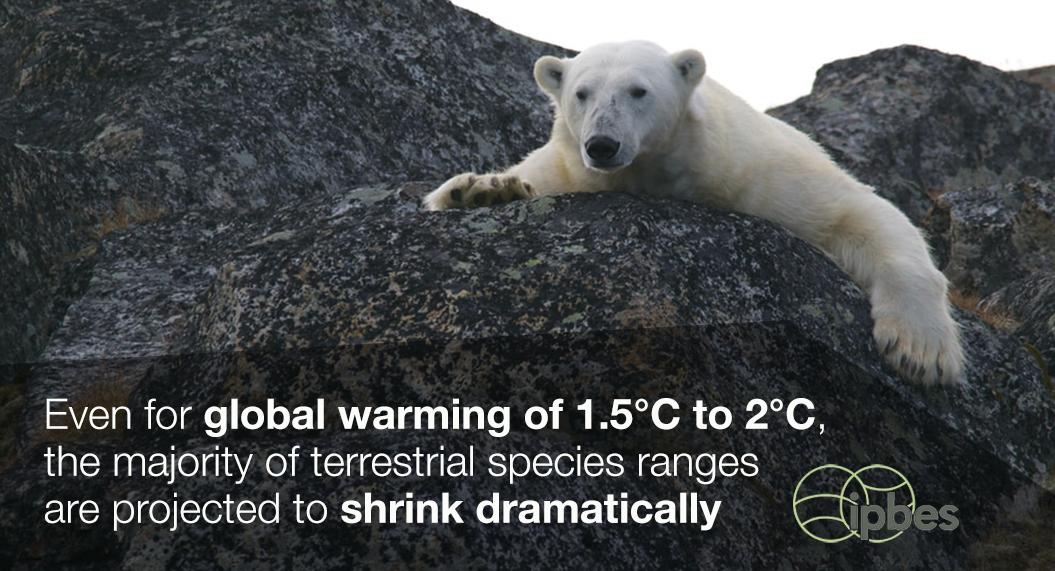
Climate Change - related extinction


The outcomes of the #ClimateActionSummit are essential not only for #ClimateChange
The fraction of species at risk of climate-related #extinction is 5% at 2°C warming and rises to 16% at 4.3°C
#Biodiversity is vital and linked to #ClimateActionNow


IPBES @IPBES
Intergovernmental Platform on Biodiversity and Ecosystem Services (IPBES)

Bonn, Germany ipbes.net


Wednesday, September 4, 2019

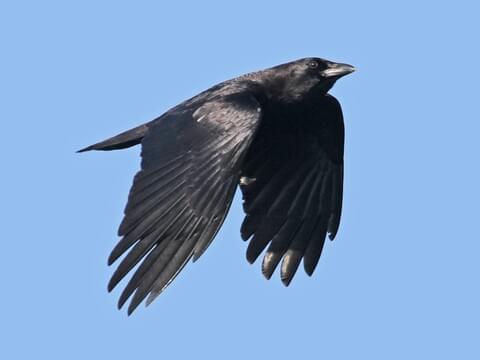
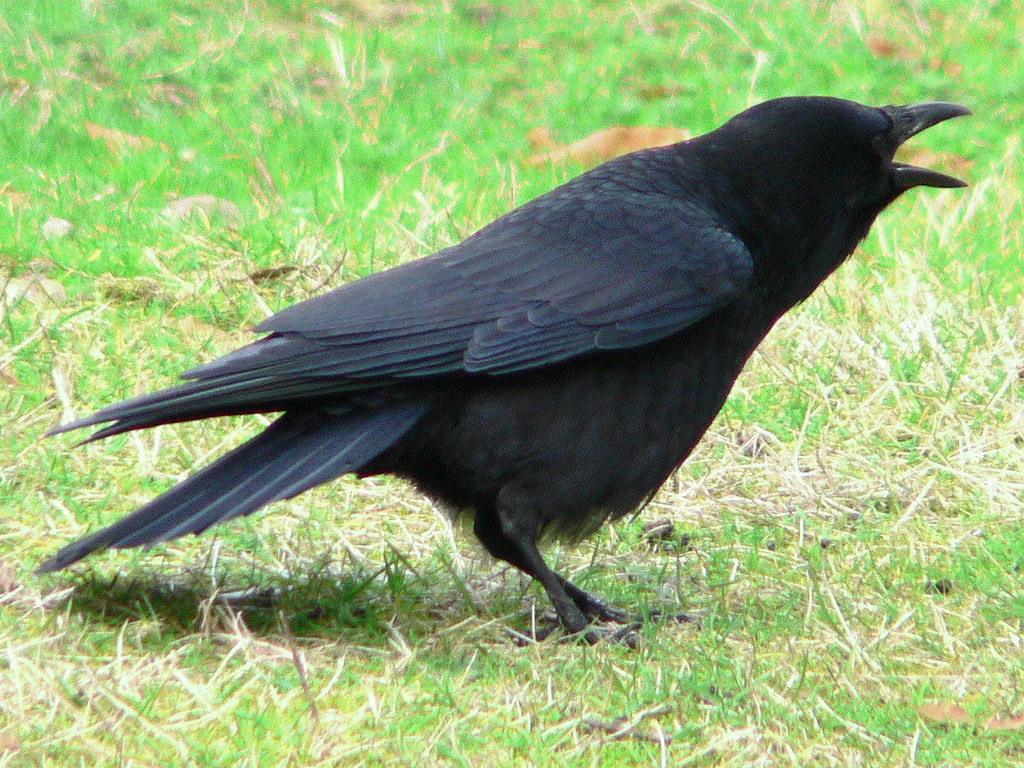
Crows love cheeseburgers. And now they’re getting high cholesterol.


Image result for crow


"If men had wings and bore black feathers, Few of them would be clever enough to be crows."
Henry Ward Beecher


Crows love cheeseburgers. And now they’re getting high cholesterol.


15:50 26 august 2019
Source: nationalgeographic.com

Angry birds: Indian man is attacked every day for three years by CROWS 'bent on vengeance' after one of their chicks died in his hands as he tried to save it

Shiva Kewat, from Madhya Pradesh, India, now has to carry a stick to shoo away the angry crows. Three years ago he tried to save a chick after it got stuck on iron netting but the baby bird died.© Photograph by Andrea Townsend

Scientists fed cheeseburgers to crows to see whether eating humans' leftovers affected the birds' survival.


As a child, Andrea Townsend loved feeding he


Scientists fed cheeseburgers to crows to see whether eating humans' leftovers affected the birds' survival.
PHOTOGRAPH BY ANDREA TOWNSEND

ANIMALSWEIRD & WILD


Crows love cheeseburgers. And now they’re getting high cholesterol.

But it’s not clear that eating ‘people food’ is necessarily bad for urban birds.
3 MINUTE READ


BY LIZ LANGLEY


PUBLISHED AUGUST 26, 2019


AS A CHILD, Andrea Townsend loved feeding her backyard sparrows and chickadees, but she wondered if it was good for them.


Townsend is now an ornithologist at Hamilton College in Clinton, New York, and she still cares about what birds are eating. Usually she gives them natural treats like unsalted peanuts, but for research purposes she tried a popular human food: cheeseburgers.


In a study published today in the journal The Condor, Townsend and her team show how urban living affects the health of American crows, including their cholesterol, and what happened to a rural population when burgers became part of their diet.

Crows Can Has Cheezburger?


Like other successful urban wildlife, crows survive in part by eating our food. Often that means eating whatever they find in our trash, including processed foods not found in nature. (Learn why crows are among the smartest birds.)


Previous studies had found that wildlife in urban or heavily touristed areas, like house sparrows and rock iguanas, respectively, had elevated cholesterol levels.

TODAY’SPOPULAR STORIES


TRAVEL
See the best pictures of summer from Nat Geo photographers


ENVIRONMENT
Hurricane Dorian—the science behind the dangerous storm


ANIMALS
Centuries of breeding have reshaped dog brains—here’s how


Townsend set out to learn whether urbanized crows also had higher cholesterol levels than their rural cousins.


First the team tested 140 crow nestlings in Davis, California, along a gradient that went from urban to rural over a span of three years. Indeed, the more urban the bird, the higher its cholesterol.


Next they supplemented the diet of a crow population in rural Clinton, New York, with a high-cholesterol human food, cheeseburgers, calling in orders of 100 McDonald’s cheeseburgers at a time.


“They thought we were joking,” Townsend says.


The Clinton area crows gobbled up the three burgers a day that researchers put under nesting trees, with some adults delivering burgers to the nestlings and some eating or storing the food for themselves.


Comparing the cholesterol and survival rates of the burger-eating crows with those of nearby crows who were weren’t supplemented with fast food, the team found that cholesterol levels did not have a detectable effect on the birds’ survival.


WATCH: CLEVER RAVEN OUTSMARTS A TRASH CAN

Ravens—close relatives of crows—may have walnut-sized brains, but these intelligent animals have learned to adapt quite well to living among humans.


However, regardless of their cholesterol levels, urban birds did have lower survival rates than rural birds. It's unknown why urban birds didn’t fare as well, though many factors such as car collisions, disease, predators and poor food quality at critical developmental stages may come into play.


The nestlings who were about to fledge from the nest with higher cholesterol after eating the burger-rich diet actually had better body condition than their country cousins. Body condition in a scientific sense, though, just means that the birds weighed more for their size.


“If you’re a chubby crow, essentially, that’s considered to be good condition,” Townsend says, noting that this definition can be the subject of debate.


In small doses, cholesterol is a good thing, Townsend notes. It’s essential to body function and is a part of cells’ structure, acting as a precursor for hormones and a component of bile, which breaks down fat, she says. It’s in excess that it’s associated with disease.


For humans, it’s later in life that high cholesterol comes home to roost, so to speak, in the form of heart disease. Crows, “which can live more than 15 years in the wild, might develop disease later in life,” but this needs further research, Townsend says.


The American crow (Corvus brachyrhynchos) has become a common sight in urban and suburban areas across North America. It will eat almost anything—from insects and seeds to garbage and even carrion. 


We Urban Animals


Kaeli Swift says she’s glad not to have to cringe every time she sees a crow dumpster diving. Swift is a post-doctoral researcher at the University of Washington who has spent years observing crows’ behavior. (Related: Do Crows Hold Funerals for their Dead?)


Swift, who wasn’t involved in the study, says the researchers did a great job of showing that the abundance of “people food” in urban landscapes is not doing crows harm, at least not in the short term.


Not that cheeseburgers should be their steady diet—if you feed backyard crows, giving them something as natural as you can get is the preferable thing, says Townsend, who doesn’t want to discourage feeding birds.




Tuesday, August 27, 2019

What will remain?


“What will remain – what already remains, in some areas – is a landscape empty of virtually every animal except fish, rats, a few amphibians and more snakes.”


Sunday, August 18, 2019

Spider Bytes


grad student. spider advocate. biologist: behavioural ecology of spiders. Rstats. knitting. arachnology. photos by . avatar by she/her
occupied lands of the Anishnabeg, Chippewa, Haudenosaunee, Mississaugas of the Credit River, & Wendat
Born 1986

Joined April 2013

http://spiderbytes.org/


A blog about spiders. → The real house spiders of Vancouver

There was a huge spider running toward me from down by a hall closet.  Not wanting to kill it, I tried to catch it in a plastic container with no luck.  

It was pretty close to Lola's daytime bed (dog) so I got a cane to crush it this time.  He got away.  So I left the balcony door open so he could leave in the night.  

At this time of year spiders are coming indoors to winter in the warmth so this blog has timely information.

This is a blog about spiders.

Home
About me / CV
This is a blog about spiders!
Recluse or Not?


The real house spiders of Vancouver

Posted on December 23, 2013

(and other West Coast cities)

UPDATE (28 July, 2018): The scientific names used in this post are out of date. The giant house spider is now Eratigena duellica, and the hobo spider is Eratigena agrestis. Tegenaria domestica remains the same!

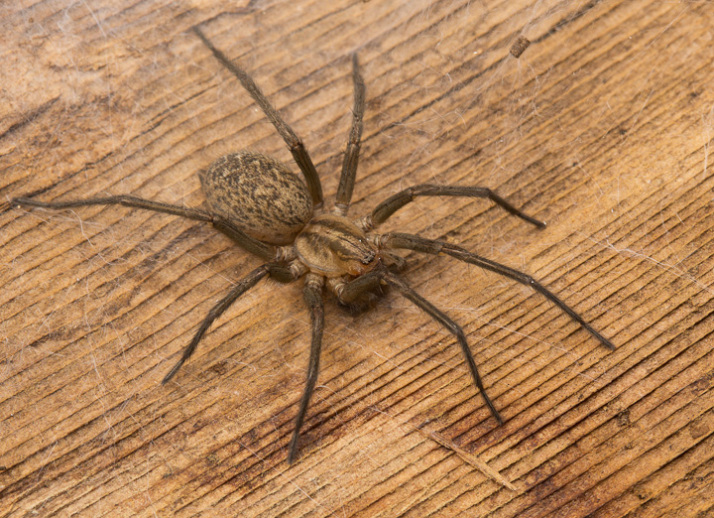
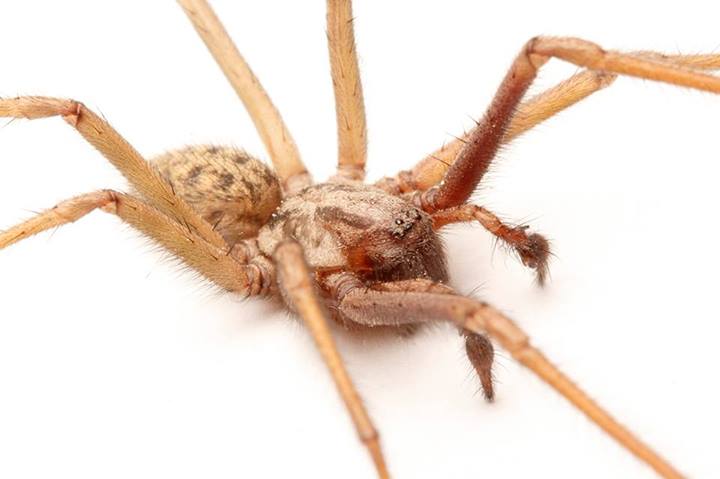
Living in Vancouver, I frequently hear about a HUGE hairy spider that was trapped in the bath or lurking in the bedroom or scuttling across the kitchen floor. More often than not, it’s described as a wolf spider (family Lycosidae). I’m pretty confident that every single time, the spider being referred to is actually a member of the family Agelenidae, and in particular, the genus Tegenaria. I’m almost as certain that the species in question is Tegenaria duellica, commonly called the giant house spider or European house spider.


NOT a wolf spider. Female Tegenaria duellica (Agelenidae) Photo: Sean McCann*

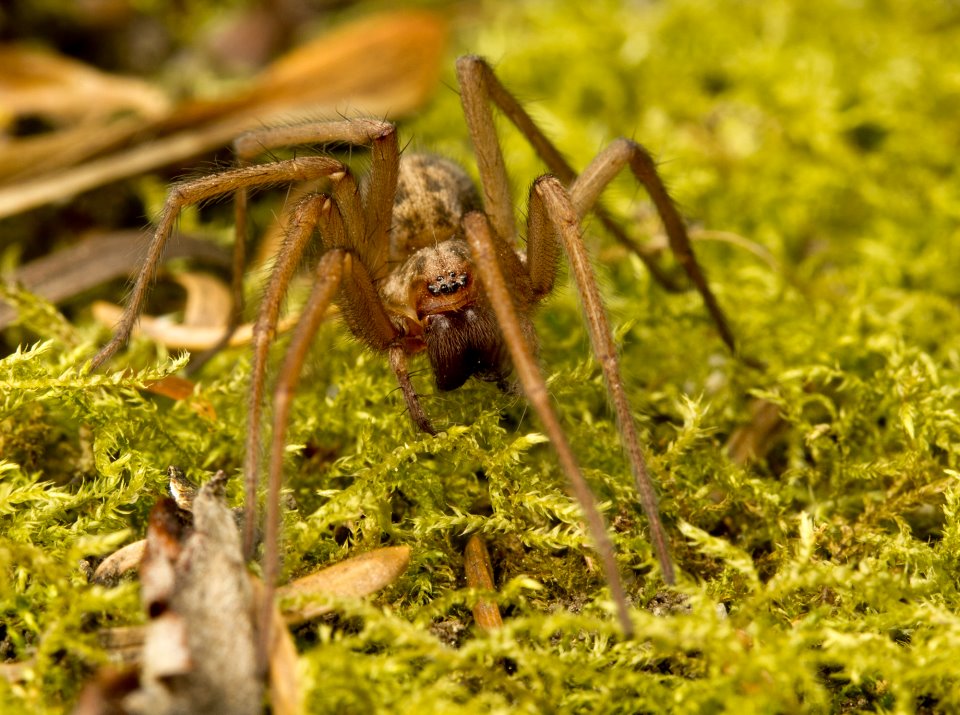
Sometimes the slightly better informed giant-spider-spotter will have taken a closer look at the spider, or photographed it, then done some online research and concluded that it’s the ‘dangerous’ hobo spider, Tegenaria agrestis. 


Female hobo spider, Tegenaria agrestis. These spiders may also be found in houses on the west coast of BC, but are generally not as large as T. duellica.

There is a lot of flat-out wrong information on the internet about hobo spiders and their supposed ability to cause necrotic lesions. Some people mistakenly refer to T. agrestis as aggressive house spiders. (1) They aren’t. And, (2) agrestis means ‘of the field’. As for ‘dangerous’, arachnologists Robb Bennett and Rick Vetter


“know of no authentic Canadian report of hobo spider envenomation.”

See their paper on the misdiagnosis of spider bites in Canada for more reasons not to fear hobo spiders. Having done a bit of work with Tegenaria agrestis, both in the field (on Vancouver Island) and in the lab, I can personally confirm that they are far more likely to be running away from humans than attempting to bite them (just like other Tegenaria species).


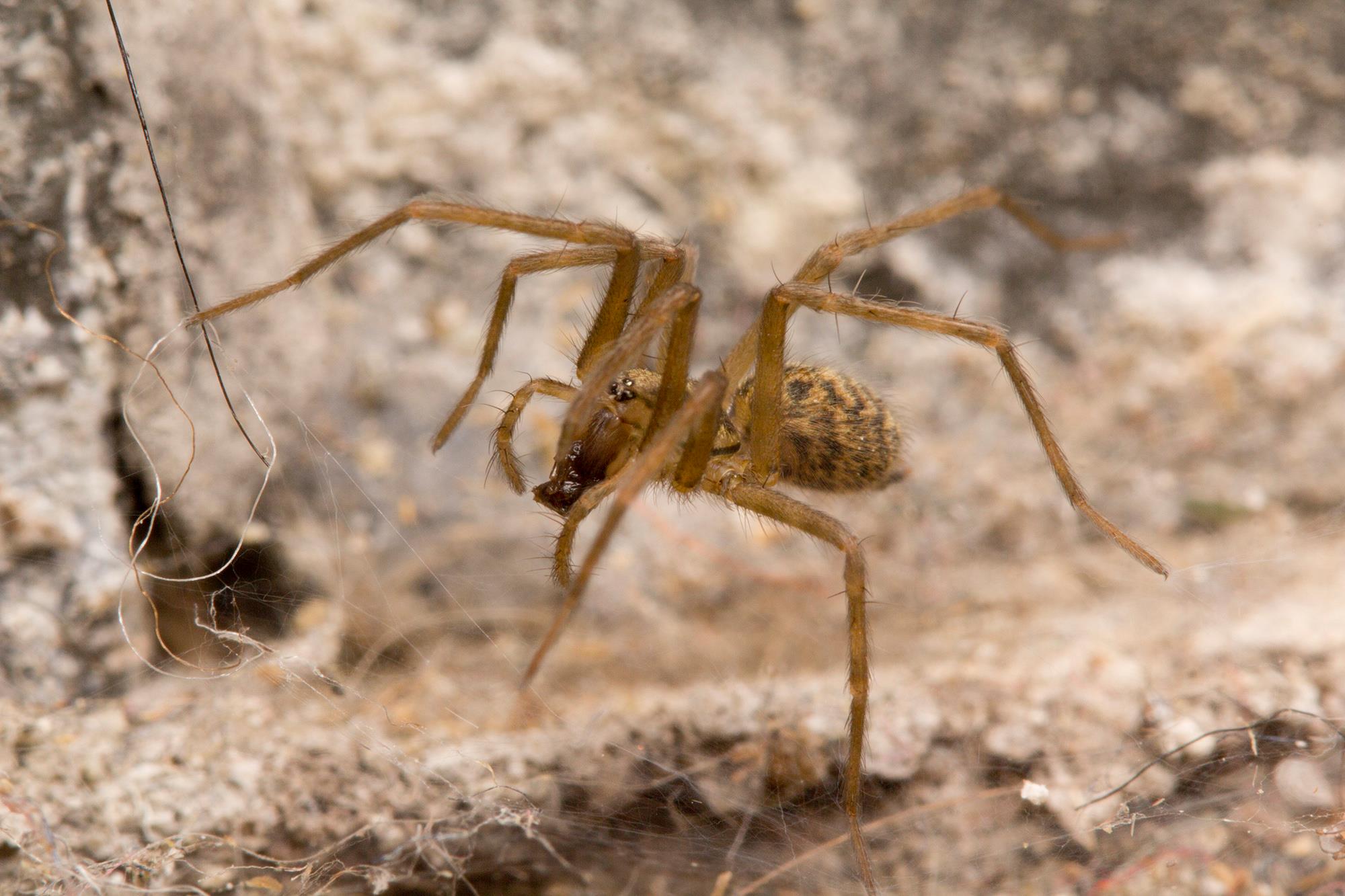
A charming female Tegenaria. Neither aggressive nor at all interested in human flesh.

Both hobo spiders and giant house spiders can be found living alongside humans on the west coast. They are not easy to tell apart, but Rick Vetter and Art Antonelli have prepared an excellent identification guide that will tell you at the very least if it’s NOT a hobo spider (not that there would be any cause for alarm if it was one). In a house in southern BC, that leaves you with T. duellica (larger) or T. domestica (smaller).


If it has long pointy palps like this guy, it’s NOT a hobo spider, but either T. duellica or T. domestica.

Even without the (fairly recent) hype about the ‘medically significant’ hobo spider, humans seem to generally fear and despise Tegenaria. In The World of Spiders—a delightful book in which the author’s passion for his subjects fairly leaps off every page–W.S. Bristowe admitted that he had no affection for house spiders. In their defence, however, he wrote that,


“A Tegenaria cannot deliver a painful bite. Its unpopularity arises from its leg span, its rapid movements and general creepyness.”

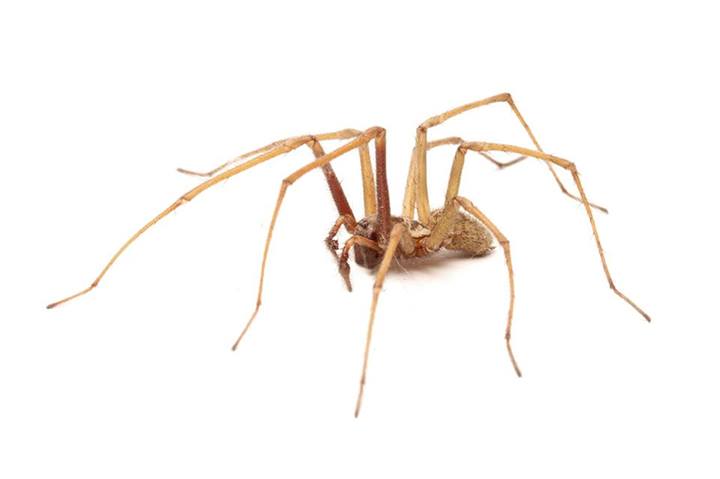
Male Tegenaria duellica. Long-legged and disposed to ‘general creepyness’.

The movement of these spiders is indeed disconcerting. Males are pretty much all leg, and they can run FAST. Bristowe noted that Tegenaria atrica can run a distance equivalent to 330 times her body length in 10 seconds. This means a human-length (let’s say 5’9″, or 1.75 m) Tegenaria could run the 100-metre dash in 1.73 seconds. Pretty speedy.

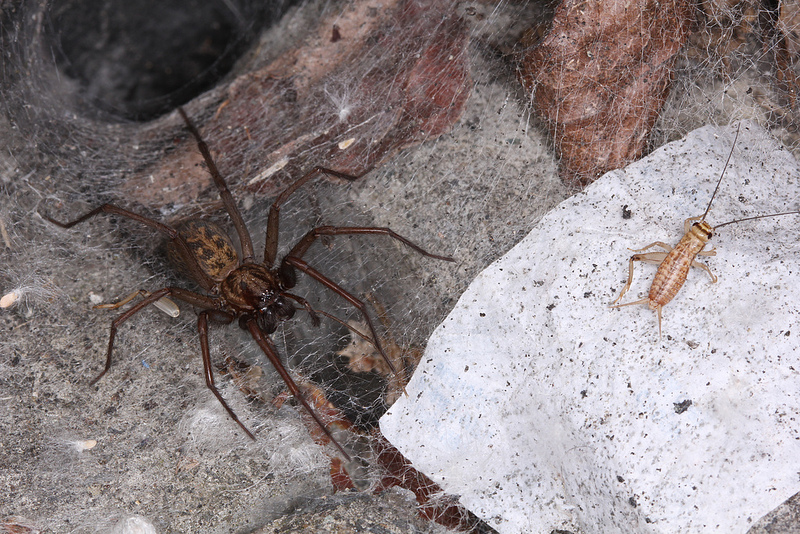
But apart from their occasionally-startling dashing to-and-fro (mainly in the fall when males go on the prowl, abandoning their webs to search for females), house spiders in general are fabulous to have around. They are great at taking care of all manner of arthropod home-invaders and are really fun to observe.


House spiders, like this Tegenaria that set up shop just inside the door of our lab, help out by snacking on any bugs that might also enjoy living inside buildings.

If you really can’t stand having them in your home, relocate them outside, and with luck they’ll find a nearby crevice in which to build the retreat of their funnel-shaped webs. You probably won’t often catch them out on their silk sheets, as they will run and hide in their retreats at the slightest disturbance.

Usually house spiders wait for prey just inside their tube-like silk retreat. We enjoy attempting to entice this Tegenaria (who lives just outside our lab) to come out and say hi by dropping small insects onto her sheet web. The speed with which she can dart out and snag prey is quite stunning!

If you’re still not convinced that house spiders are good neighbours rather than enemies, you could always try Bristowe’s method for curing fear of Tegenaria: eat one**.

*Sean McCann, a house spider enthusiast, provided all the photographs for this post. He’d like it to be noted that in addition to being incredibly fast, house spiders also *sound* creepy (if you’re lying on the floor and one runs past your head).

**It didn’t actually end up curing his fear of house spiders, but he did win a lot of money as a result.

SHARE THIS:


Saturday, August 17, 2019

The Graduate One word: "plastics"


I think of this scene often because we all look for profitable ways to spend our time and this looked like the ultimate insider tip in 1967.  To see the damage to the Planet wrought by "plastics" in the 50+ years since the movie was released is nothing less than stunning!

The Graduate   One word: "plastics"


Baby Dugong Rescued in Thailand only to Die from eating Plastic Pollution in the Ocean


Dugong is a species of marine mammal similar to the American manatee


In this photo from May, an official of the Department of Marine and Coastal Resources feeds seagrass spread to Marium, a baby dugong who became separated from her mom in Libong island, Trang province, southern Thailand. The dugong has since died. (Sirachai Arunrugstichai/The Associated Press)


An eight-month-old dugong nurtured by marine experts after it was found lost near a beach in southern Thailand has died of what biologists believe was a combination of shock and ingesting plastic waste, officials said Saturday.


The female dugong — a large ocean mammal — was named Marium and became a hit in Thailand after images of biologists embracing and feeding her with milk and seagrass spread across social media. Veterinarians and volunteers had set out in canoes to feed Marium up to 15 times a day while also giving her health checks.


Last week, she was found bruised after being chased and possibly attacked by a male dugong during the mating season, said Jatuporn Buruspat, director-general of the Department of Marine and Coastal Resources.


Conservation teams tried to help the animal, which became separated from her mother

She was brought in for treatment in the artificial sea on Libong Island in Krabi province.

"We assume she wandered off too far from her natural habitat and was chased and eventually attacked by another male dugong, or dugongs, as they feel attracted to her," Jatuporn said Saturday.
An autopsy showed a big amount of plastic waste in her intestine, which could also have played a part in her death as it led to gastritis and blood infection, he said.


"She must have thought these plastics were edible," Jatuporn said.
The dugong is a species of marine mammal similar to the American manatee and can grow to about 3.4 metres in length. Its conservation status is listed as vulnerable.
Natural Resources and Environment Minister Varawut Silpa-arcpha said at a news conference that Marium's corpse will be stuffed for research purposes, and that the animal's death saddens the whole nation and the world.
"Her death will remind Thais and people all over the world not to dispose of trash into the oceans," he said.