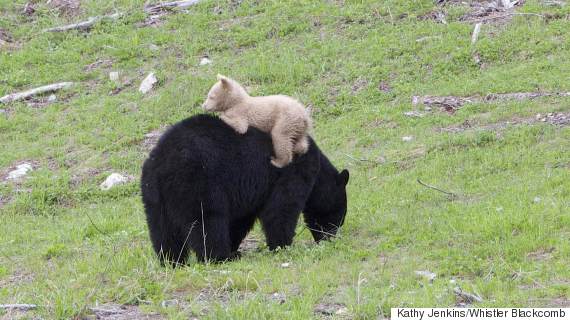
Bear experts are trying to demystify the genetic makeup of a rare cream-coloured bear. (Photo: Kathy Jenkins/Whistler Blackcomb)
The "little guy'' may not survive for long and could become habituated to people and garbage.
"It may not be with us in the next few weeks. Cubs have about a 50
per cent chance of survival in year one. It's a rough life,'' he said.
"The bears are going into mating season and that's when the cubs are
at a very high risk because the males potentially kill the cubs and
that'll force the mother to make some adjustments in their patterns of
movement.''
The mother has been seen in the area for four or five years, he said,
adding the pair has moved about looking for food and were also seen in
Garibaldi Provincial Park and a golf course.
Sometimes birds fall directly into our lives. BirdNote listener
Joseph Clark tells of discovering two Barred Owlets on the ground near
his home in East Haddam, Connecticut.
The young birds had fallen out of
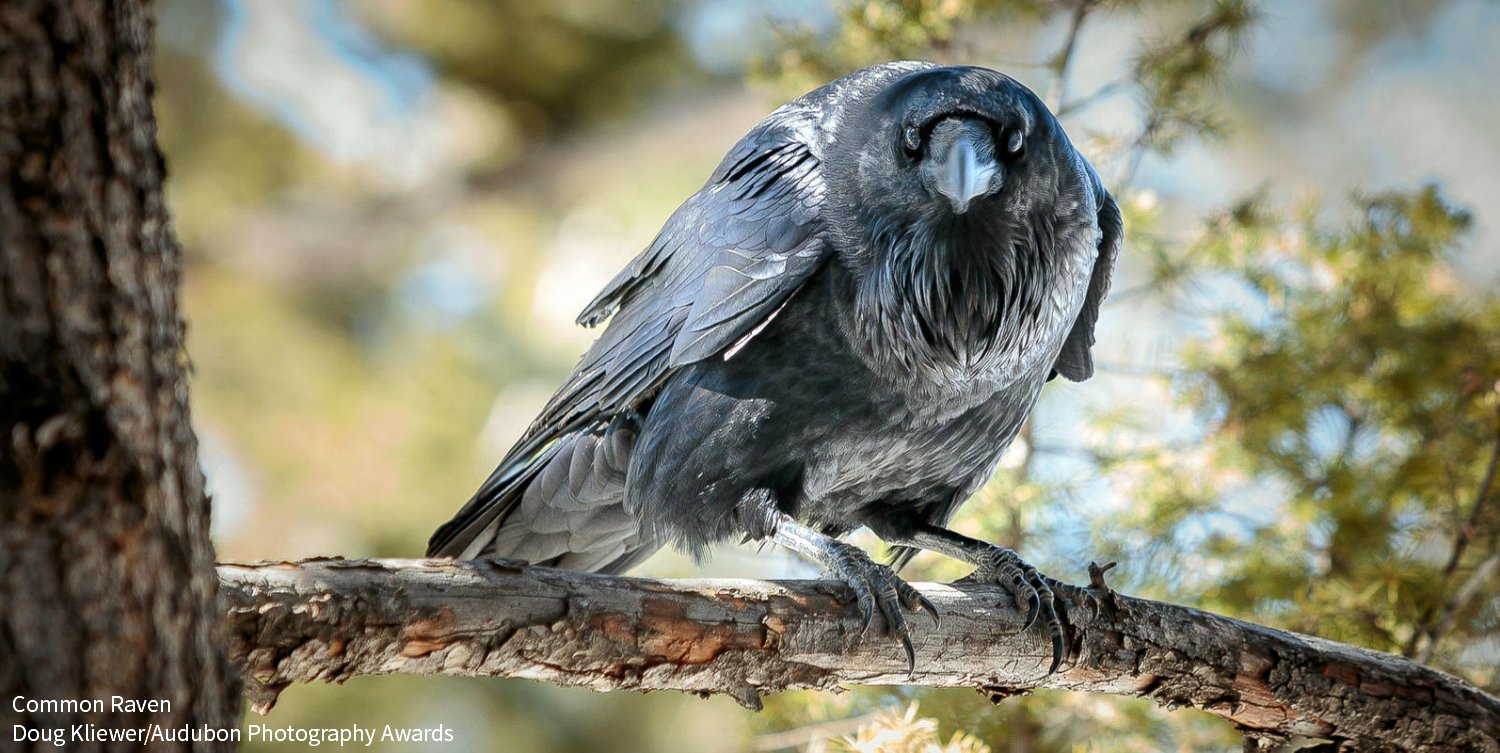
an ancient sugar maple and were being harassed by ravens.
Clark scared off the ravens, and with the guidance of Kasha Breau
of the Connecticut Audubon Center, got the young owls back up into the
tree. The mother owl stayed nearby, keeping a close eye on the rescue.
Once the birds were safe, Breau advised Clark to observe the owlets
napping, which they do during the day. What he saw delighted him.
Keeping their talons tightly gripped on a branch, the owlets lie down on
their stomachs, turned their heads to the side, and fall asleep. Their
naps are short, and when they are asleep, they do not like to be
awakened, even to be fed.
A young owl doesn’t fall out of the tree while it snoozes, because
its back toe, the hallux, holds onto the branch. The hallux will not
open or let go until the bird bends its leg. Still, before they can fly,
most owlets explore and often end up on the ground, sometimes dropping
right into the middle of our lives.
Democrats have promised to stage a last-ditch effort to thwart the appointment of Scott Pruitt as administrator of the Environmental Protection Agency, amid fears within the agency that he will trigger an “unprecedented disaster” for America’s environment and public health.
Donald Trump has nominated Pruitt to lead an agency he has sued multiple times in his role as attorney general of Oklahoma. Pruitt has vowed to dismantle serried environmental rules and is currently involved in a legal effort by 27 states to overturn Barack Obama’s clean power plan, the president’s centerpiece policy to reduce greenhouse gas emissions.
Donald Trump picks climate change sceptic Scott Pruitt to lead EPA “The American people are tired of seeing billions of dollars drained from our economy due to unnecessary EPA regulations, and I intend to run this agency in a way that fosters both responsible protection of the environment and freedom for American businesses,” Pruitt said in a statement.
Trump said Pruitt is a “highly respected attorney general” who will reverse the EPA’s “out-of-control anti-energy agenda that has destroyed millions of jobs”.
Earlier this year, the president-elect said there would be just “little tidbits left” of the EPA if he made it to the White House.
Environmental groups have reacted with dismay at the nomination of Pruitt, warning that he will not only tear up much of Obama’s climate legacy but also imperil the reliably clean air and water that Americans have largely enjoyed over the past 40 years.
Democrats have vowed to fight Pruitt’s nomination, with Chuck Schumer, the minority Senate leader, promising a torrid confirmation hearing for the Republican lawyer.
Some Democrats are hopeful that a number of Republicans could join them to block Pruitt’s confirmation.
“This is full-fledged environmental emergency, this is someone (Pruitt) who is a professional climate change denier,” said Brian Schatz, a senator from Hawaii.
“This is a litmus test for every member of the Senate who believes in science. We are going to do everything to oppose his nomination, and we are confident we can do so.”
Other elected Democrats have also vowed to take on Pruitt, with Eric Schneiderman, attorney general of New York, promising to “use the full power of my office” to compel the EPA to uphold federal environment laws.
Republicans, the majority party in the Senate, have largely welcomed Trump’s pick. James Inhofe, an Oklahoma senator and a vocal denier of climate science, said Pruitt is “thoughtful, experienced and a natural pick” for the EPA administrator role. Inhofe is chairman of the Senate environment committee, which will question Pruitt prior to his confirmation.
EPA staff have expressed nervousness over Pruitt’s nomination, given his zealous pursuit of the agency.
Pruitt has fought against EPA regulations that prevent air pollution haze in national parks, methane leaks from drilling and mercury and arsenic seeping from power plants.
Trump’s pick to lead Environmental Protection Agency has supported fossil fuel firms and sought to hobble public health regulations he will be responsible for
The attorney general has proved to be such a staunch advocate for fossil fuels that he allowed Oklahoma firm Devon Energy to use his letterhead to send a three-page complaint to the EPA in 2014.
He has questioned the accepted scientific stance on climate change, claiming in May that the “debate is far from settled. Scientists continue to disagree about the degree and extent of global warming and its connection to the actions of mankind.”
One EPA scientist, who asked not to be named, said that Pruitt risks being an “unprecedented disaster” for the natural world and public health.
Other EPA advisers warned that the agency risks being trampled under Trump’s agenda of boosting corporations and eviscerating climate action.
“Pruitt doesn’t believe in the mission of the EPA, which is to protect human health and the environment,” said Lisa Garcia, vice-president of Earthjustice and a senior adviser to the last two EPA administrators. “This isn’t a business agency, it’s an environmental agency. It’s scary to have someone who doesn’t believe in the mission of the EPA walking in to run it. I expect they will choke the funding of the EPA and stop enforcing laws. The work of the agency will basically come to a halt. “People at the EPA are in shock, they are worried about carrying out its mission. People are worried about how they will do their jobs, even people who voted for Trump. They didn’t expect this. Clean air and water, safe places for our children to play – these things should be bipartisan. They should be above politics.”
Trump has previously called climate change a “hoax” and threatened to end all spending on climate change and clean energy, but environmentalists saw a glimmer of hope when the real estate magnate met with Al Gore, the former vice-president, and the actor Leonardo DiCaprio. Both regularly call for action to reduce greenhouse gas emissions. The nomination of Pruitt, however, presages a lengthy battle between the Trump administration and green groups. “Donald Trump has made it clear that he intends to wage war on clean air and clean water,” said Benjamin Schreiber, climate and energy program director at Friends of the Earth US. “Trump has also put our climate in peril and shown he is out of step with the American people. With this EPA pick, Donald Trump is putting all Americans at risk.”
Artur Bordalo is a Portuguese street artist who began to keenly observe the way humans recklessly dispose of their garbage. He looked at the bald tires and tattered furniture that was littered around the neighbourhood alleys and began to wonder why people tend to shy away from repurposing perfectly useable materials.
People don’t seem to care, or all too easily forget, that their disposable lifestyle has a vast affect on the planet.
He decided to use his artwork to draw attention to this issue of waste production by depicting nature itself. He builds animals out of the very materials that are responsible for their destruction; the majority of the materials are found in wastelands, abandoned factories or from recycling companies.
Burnt garbage cans, rusty appliances, and dented bumpers are just some of the objects that can be identified when his artwork is closely inspected.
The point is you have to focus your eye to find the camouflaging junk that is purely a result of our bad habits. His work
aims to spread social awareness about humanity’s most forgotten
ecological mess.
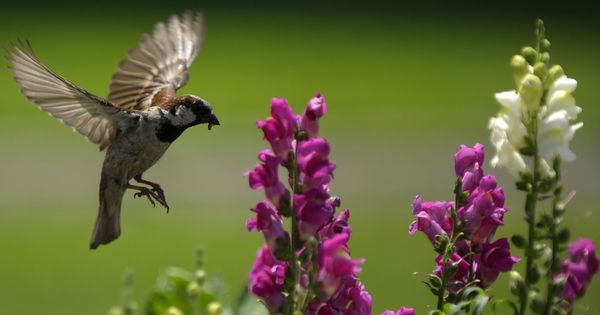
The sparrow is dying out in Indian cities. This is how you can help save it from your terrace
Conservation can start with something as simple as buying a nest
online, hanging a bird feeder in your windows, and offering the birds a
safe space.
Prakash Mathema/AFP
My earliest memory of a bird – any bird – is that
of a couple of house sparrows, which played a very comforting role in my
five-year-old life. My grandmother’s home, which we visited annually,
was like a taxidermist’s parlour. A number of our ancestors were, I am
sorry to say, keen shikaris, and though I did not mind the antler heads,
I absolutely refused to enter the drawing room where a large tiger was
spread-eagled across the wall. His snarling face and his mouth, studded
with pointed fangs, rested on a wooden bracket. And it became the
subject of nightmares, until a pair of cheerful sparrows decided to nest
inside that gaping mouth. Dida allowed the birds to make a home only to
ensure my fears vanished. They were the friendliest of birds and would
accept breadcrumbs from my hand, darting down from their home in the
jaws of the tiger.
So, it is with sadness that I now notice the
dwindling numbers of sparrows in Delhi and Kolkata, the two cities I am
most familiar with. Research shows that the bird (Passer Domesticus) –
once the most common avian visitor to every garden – has declined in
alarming numbers the world over, especially in urban areas and certain
rural regions where pesticide use is high.
Photo credit: Rakesh Khatri
Dying species
Saving
sparrows has become a matter of urgency as the birds have been
recognised as an indicator of environmental health and urban
biodiversity. World Sparrow Day is marked on March 20 and a number of
measures to increase their numbers are encouraged on this day.
Speaking
of policy, the single most cruel decision to cull the creatures was
introduced by Chairman Mao Zedong in 1958 in China, during his Four
Pests Campaign. The entire populace was encouraged to kill rodents,
flies, mosquitoes and, very wrongly, sparrows. It was believed that
sparrows depleted fields of grain but the fact was that by 1960, the
large-scale extermination of the birds
was correlated to a decline in grain as it was proven that sparrows
played an important role in pest control, because their young fed on
small insects that infested paddy fields. Recognising the folly of his
decision, Mao was induced to replace sparrows with bed-bugs, but the
damage was done.
A poster for the Four Pests Campaign.
But why are sparrows declining in countries which are more bird-friendly? There are a number of reasons,
mostly linked to loss of habitat. Town houses built in India by older
generations had Mangalore tiles, eaves and projecting balconies. These
architectural details with crevices and overhangs made it easy for the
birds to nest. There were small gardens filled with shrubs, and boundary
walls were often green hedges – all very sparrow-friendly, besides
being good for the environment. Today, an increasing number of people
live in apartments in sleek gleaming towers with metres of plate glass,
boundary walls are solid with concrete and gardens are vanishing. Even
parks have concrete walkways and Phoenix palms instead of shade-giving
trees.
It would be ideal if town planners would plant shady trees
and cover boundary walls with creepers in public parks. The new park in
Delhi at Sunder Nursery and the Agri- Horticultural Park at Alipur,
Kolkata, are good role models.Scientists have also correlated the decrease in birds to radiation from mobile towers
as their reproductive capacities are adversely affected by the
electromagnetic radiation. They suggest cities should have wooded
mobile-tower-free areas for the birds to survive in. In addition, birds
are also threatened by global warming and noise pollution.
Gardens for all
Gardens
are not only about colourful flowers or organic vegetables – they are
traditionally supposed to appeal to other senses. Fragrance is very
important, but so is the soothing sound of splashing fountains and early
morning birdsong. The twittering song of the sparrow is sweet and must
be allowed to survive. It should not vanish into dim memory like the
glow of the firefly.
Photo credit: Rakesh Khatri
I
attended a workshop recently on how to make sparrow nesting stations
for the small town garden, balcony or rooftop terrace garden.
This,
along with a bird seed dispenser for smaller birds – which is available
online and is relatively inexpensive – can help the gregarious sparrow
feel more welcome.
It is a great project for children during the summer
holidays, and was conducted by the ECO-Roots Foundation, a conservation
body which has made and distributed around 30,000 sparrow nests in
Delhi-National Capital Region alone.
The sparrow is, after all, the
state bird of Delhi.
Materials required to build a nest
4 strips of split bamboo
Jute cloth cut from a gunny bag
Coconut husk fibre
A spool of thread
A pair of scissors
Bend
the strips of bamboo into circles and tie with string.
Interlock three
circles vertically and tie to form a sphere.
Tie the last bamboo strip
horizontally around the central diameter to strengthen the sphere.
Secure all cross joints with the string firmly in order that the sphere
retains shape.
Bend the wire into a small hole for the bird to
enter the nest and secure in an upper quadrant.
Cover the sphere with
jute cloth and cut away the area around the entrance hole with the
scissors.
Cover the jute ball with coconut fibre and secure with string.
The
nest is ready and can be hung at between 8 and 10 feet.
Do hang the
seed dispenser nearby and set out an earthenware bowl with drinking
water.
If you do not have the time for a DIY effort, small birdhouses
are available online and birds love them.
Hopefully the sparrows and
other birds such as bulbuls should come calling, especially if there are
no mobile towers in the vicinity.
Sandhill Cranes return to the Arctic Refuge year after year to nest and raise their young.
Photo: Scott Helfrich/Audubon Photography Awards
Defend the Arctic National Wildlife Refuge
Oppose drilling in the Arctic National Wildlife Refuge, one of the wildest places left in America.
An endangered Whooping Crane (left) and two Sandhill Cranes.
As a co-owner of this public land, hold elected officials who support drilling accountable and will continue to advocate against drilling in this cherished landscape. Audubon stands united with other conservation organizations and the
Gwich'in people in our efforts to prevent drilling in this nursery for
millions of migratory birds, polar bears, and the Porcupine Caribou
Herd.
We are working together with other groups to collect 200,000
pledges—one for every caribou that depends on the Arctic Refuge.
The passing of Sudan is a sobering reminder of the many other endangered species that we must do more to protect. Don't let chimpanzees be next, help us to protect chimps and their habitat here: https://janegoodall.ca/ways-to-give/give-once/ … Photo By: Ami Vitale, National Geographic Creative
"The Last Three" Bids a Sad Farewell to Rhinos on the Brink of Extinction
There were three northern white rhinos left when Australian artists Gillie and Marc Schattner unveiled their monument in New York City. Now there are just two.
The trio of animals look like they have fallen from the sky, landing one on top of the other in a crowded square in New York City. Standing at the bottom is Sudan, a northern white rhinoceros who until recently lived at a nature reserve in Kenya. On top of him, turned upside down, is Najin, a slightly smaller figure of a female rhino who happens to be Sudan’s daughter. And on top of her upturned legs sits Fatu, the youngest and smallest of the trio. She is Najin’s daughter and Sudan’s granddaughter.
The Last Three, an installation created by Australian artists Gillie and Marc Schattner, is a poignant portrait of an actual animal family and a species that will soon disappear from the face of the earth. The bronze rhinos are accurate in every detail, including the rough, wrinkled skin, although they are slightly larger than the real ones, Gillie says. Together, the three effigies form a tower of tribute―but equally important, they serve as a call to action, since the northern white rhinos of east and central Africa have been hunted to the brink of extinction. Their horns—touted to have medicinal powers—are considered to be among the most expensive substances on the planet, traded for more than the price of gold or cocaine in the markets of China and Vietnam. In fact, the protein that makes up rhino horn has no more potency than human fingernails.
And now there are two. While Gillie and Marc (who sign their works with their first names only) were unveiling their monumental rhino pyramid in New York on March 15, 45-year-old Sudan was taking his final breaths in Ol Pejeta Conservancy in Kenya. The trio of animals lived under a team of devoted caretakers and 24-hour armed guard to protect them from poachers. When Sudan’s age-related medical conditions grew significantly worse, veterinarians decided to euthanize him. In a last-ditch attempt to save the species, the trio had been transferred from a zoo in the Czech Republic in 2009, but efforts to breed the rhinos had failed. Sudan had a low sperm count, perhaps as a result of his advanced age, and Najin and Fatu both proved to have fertility issues that made reproduction impossible. With no living male and two infertile females, the northern white rhino species (or subspecies, depending on which scientist you talk to) has come to the end of its road. (Najin and Fatu will remain at Ol Pejeta.) “The fact of the matter is that we’ve taken our eye off the ball and allowed this to happen, so the blood is on all of our hands,” Marc says. With the sculpture’s position in Astor Place, one of New York’s busiest hubs, he hopes it will raise awareness of the rhinos’ plight and encourage the city’s residents and tourists to sign an online petition demanding an end to the illegal trade in rhino horn. It’s a crisis that has also brought Sudan’s cousins to the brink of extinction, Marc adds. “The eastern black rhinos are next. They are down to only about 2,000 and their numbers are dwindling. Before we know it, we’ll have no rhinos at all.”
The husband-and-wife artists knew when they took on the project last year ago that they were fighting the clock. They spent a week at the Kenyan conservancy observing the rhinos at close range, especially the elderly Sudan, who was the most approachable of the three, Gillie says. “We studied them every day. We photographed their skin, faces, bodies. We watched them move. We watched them breathe. We touched them.” She says Sudan had the gentle manner of a friendly dog, while the younger females required more caution.
Back in Sydney, where they live, the Schattners molded clay models of the three animals, which were then cast at a foundry in Thailand and packed into two shipping containers for the voyage to the United States. The artists hope that as many as five million people in New York will see the statue before it travels to Melbourne, Australia, later this year. “Marc and I believe it’s never been more critical to connect people to nature so that we’re visibly confronted with what we’re doing to the planet,” Gillie says. “That’s why it was so important to bring the northern white rhinos to New York.”
The Last Three by Marc and Gillie is currently on display in New York City’s East Village; no closing date has been announced. onEarth provides reporting and analysis about environmental science, policy, and culture. All opinions expressed are those of the authors and do not necessarily reflect the policies or positions of NRDC. Learn more or follow us on Facebook and Twitter.
Brown bears, wolves and lynx numbers rising in Europe
Land-sharing model of conservation is helping large predators thrive
in the wild – and even the British countryside could support big
carnivores, study finds
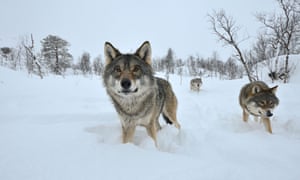
Wolves in snow, Norway. Revival of wild predators is largely due to
changing attitudes to wildlife and EU’s successful conservation
strategies.
Photograph: Fred van Wijk/Alamy
The forests – and suburbs – of Europe
are echoing with the growls, howls and silent padding of large
predators according to a new study which shows that brown bears, wolves
and lynx are thriving on a crowded continent.
Despite fears that large carnivores are doomed to extinction because of rising human populations and overconsumption, a study published in Science has found that large predator populations are stable or rising in Europe.
Brown bear, wolf, the Eurasian lynx and wolverine are found in nearl








 Courtesy Gillie and Marc Schattner