How to be a responsible steward of Democracy, Human Rights Capitalism and Planet Earth.


HOW TO BE A RESPONSIBLE STEWARD OF PLANET EARTH


Creating a better world for all through social media activism

Thursday, February 19, 2015

Sample of Bill Moyers on Twitter


Cultivate love and compassion for all livng beings

Putty Nose

Healthy

Compassion


"And if we dare to look into those eyes, then we shall feel their suffering in our hearts.
More and more people have seen that appeal and felt it in their hearts.
All around the world there is an awakening of understanding and compassion, and understanding that reaches out to help the suffering animals in their vanishing homelands.
That embraces hungry, sick, and desperate human beings, people who are starving while the fortunate among us have so much more than we need.
And if, one by one, we help them, the hurting animals, the desperate humans, then together we shall alleviate so much of the hunger, fear, and pain in the world.
Together we can bring change to the world, gradually replacing fear and hatred with compassion and love. Love for all living beings."

- Jane Goodall


“The greatness of a nation and its moral progress can be judged by the way its animals are treated”
- Mahatma Gandhi


"Until one has loved an animal, a part of one's soul remains unawakened."

- Anatole France
Nothing will benefit human health and increase the chances for survival of life on Earth as much as the evolution to a vegetarian diet.
- Albert Einstein


Small acts, when multiplied by millions of people, can transform the world.
- Howard Zinn


When spiders unite, they can tie down a lion.
-Ethiopian proverb

Friday, January 30, 2015

The modern environmental movement: Greenpeace


Poverty


Wednesday, January 21, 2015

Vegan is an alternative

weneedtotalk600


Forbes
From Life Cycle-Based Sustainability Indicators  for Assessment of the U.S. Food System. Center for Sustainable Systems, University of Michigan

Four Ways To Eat Better While Celebrating The Earth

This Earth Day, celebrate the earth by making more informed choices about what you eat. It might even have an impact on your own body and wallet too.
Beth Hoffman@BethFoodAg Jan 9
Four Ways To Eat Better This Year While Celebrating The Earth

Food and Drink 1,167 views

Four Ways To Eat Better While Celebrating The Earth

More than forty years ago Earth Day helped galvanize a popular pro-environment movement.

Yet today, the number and scope of environmental problems feels overwhelming. Aside from celebrating Earth Day, it doesn’t seem there is much we can do to make things better.

But perhaps we can begin by eating.

Of all our daily human activities, what we eat has perhaps the largest direct impact on the environment. Agriculture uses an estimated 70 percent of global freshwater to grow our food, and in the U.S., 22 percent of all our energy use is gobbled up by the food system.

So how to truly eat better and impact the environment?

Below are four important concepts to take with you next time you visit the grocery store.

1. Most of your food’s ‘carbon footprint’ does not come from being grown far away.
A common myth is that the food system uses so much fossil fuel because we ship food around the globe. And while it clearly takes energy to transport food, the truth is that our addiction to “convenience foods” uses far more.
From the making of fertilizer to the running your refrigerator, the food system uses an enormous amount of energy. But according to the USDA, at no point do we use more of it than in our very own homes. While per capita energy use in the United States dropped almost 2 percent, our food-related per capita energy use increased more than 16 percent.

Between 1965 and 1995 the time Americans spent cooking at home dropped from 65 to 31 minutes a day, and today only slightly more than half the population reports cooking on a daily basis.
And while not turning on the stove sounds like a great way to cut back on the energy bill, it also means you are purchasing items which require far more processing and packaging than any of us would ever do at home.
Not only are most of those fast and packaged foods higher in sugar and lower on nutrients. They are also wasting valuable energy resources.
From Life Cycle-Based Sustainability Indicators  for Assessment of the U.S. Food System. Center for Sustainable Systems, University of Michigan
From Life Cycle-Based Sustainability Indicators
for Assessment of the U.S. Food System. Center for Sustainable Systems, University of Michigan


2. ‘Conventional’ food uses far more energy than organic
According to the Environmental Protection Agency, in 2007, U.S. agriculture used more than a billion pounds of pesticides (which works out to be only a fifth of the pesticides used world wide, however). The USDA also reports farmers used 22 million tons of synthetic fertilizer in 2011.
That is a lot of chemicals to be spraying on the land. But the impact of chemical use does not end there.
Petroleum chemicals such as ethylene, propylene and methane are used to create many of the pesticides on the market today. And the amount of energy used to create synthetic nitrogen fertilizer (more than 13 million tons) could heat 5.5 million homes for a year.
Additionally more than half the nitrogen our farmers now use comes from places like Trinidad, Russia, and the Persian Gulf.
3. Like cosmetics, agri-chemicals are tested on animals
Many avoid cosmetics tested on animals – but what about the food you eat? How do companies test for the toxicity of chemicals used in agriculture?

Agricultural chemicals are also tested on animals. And not just lab rats and mice. Dogs and cats, rabbits and monkeys [click here to read an example of the kinds of tests performed].
Enough said.

4. We waste good money on crappy food, which in turn wastes resources
The argument against eating organic foods or better raised meat (which, by the way, you should also eat much less of) is that it costs too much. But what do we spend our money on, and is it worth what we pay?

In 2013, Americans drank close to 39 gallons of soda per person (at a cost of about $150 per person), and in 2011, roughly 25 percent of the calories we consumed came from snack foods.

And yet we willingly pay 1000 times more for that can of soda then what it actually costs. It turns out, it is not organic food that is the rip off, but all that snack food we put in our shopping carts without second thought.

In other words, simply refraining from drinking soda could free up more than $10 a month to spend on better raised food. The National Institutes of Health also estimates that bringing lunch to work one day a week could also save $270 and 48,000 calories a year.

This Earth Day, celebrate the earth by making more informed choices about what you eat. It might even have an impact on your own body and wallet too.


Source: http://www.forbes.com/sites/bethhoffman/2014/04/22/four-ways-to-eat-better-and-celebrate-the-earth/

Saturday, January 10, 2015

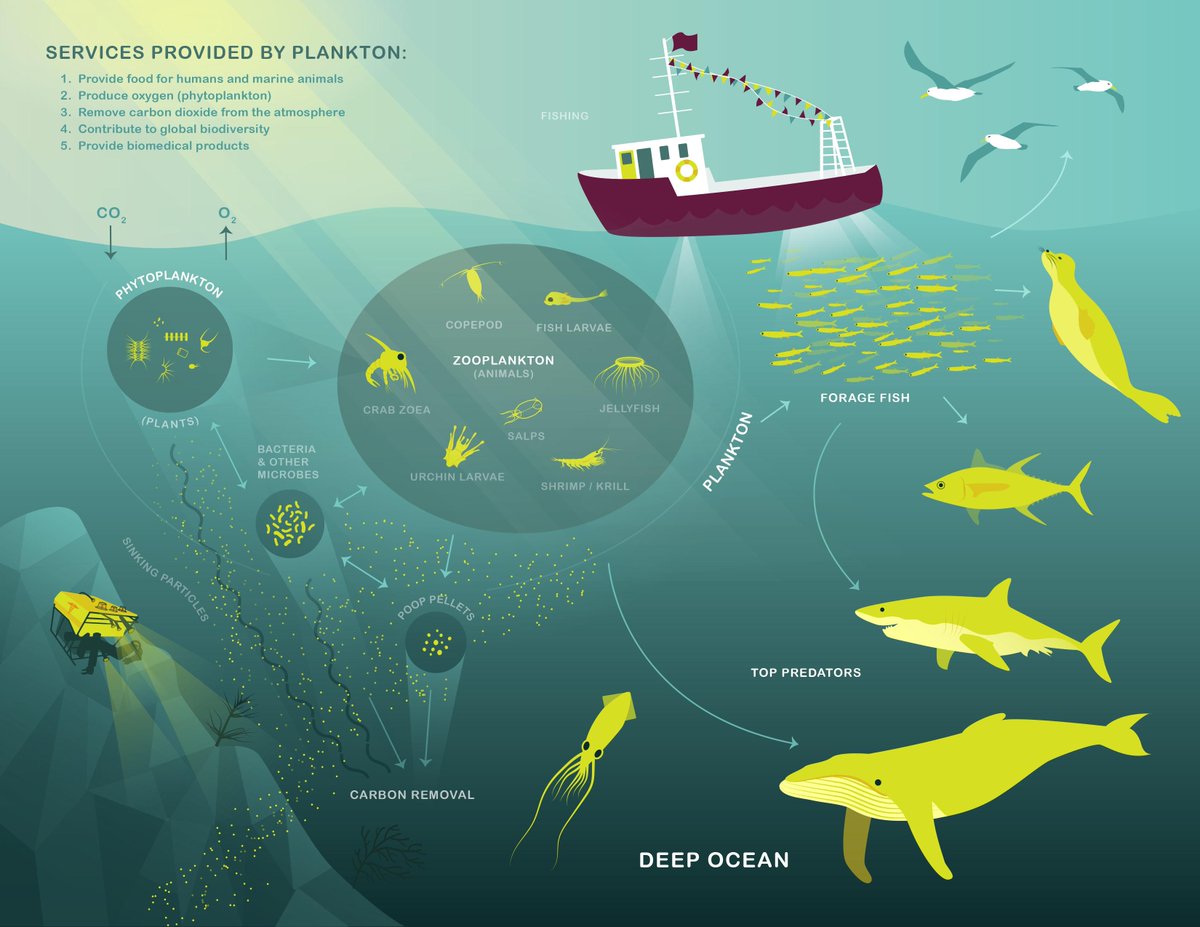
Planton equals life


Embedded image permalink

No plankton = no life. C/O more about plankton's vital role in the ecosystem:

Booz Allen HamiltonVerified account@BoozAllen
Provides management & tech consulting to US govt. in defense, intelligence, and civil markets, & to major corporations, institutions, and non-profit orgs.
McLean, VA · boozallen.com


Tuesday, October 14, 2014

Slowly eaten into extinction, Pangolins are now the most illegally smuggled mammal : TreeHugger


Pangolin anteater
CC BY-SA 3.0 Wikipedia


CC BY-SA 3.0 Wikipedia
The IUCN's Red List of Threatened Species has been updated to reflect the sad fate of the 8 species of pangolins, a scaly anteater. All of them are now considered threatened to various degrees, with two species categorized as "critically endangered". Why are they facing extinction? Because their meat is in high demand at banquets in Vietnam and China and their distinctive scales are used in Chinese medicine (which is ridiculous when you know that the scales of pangolins are made of keratin, the exact same protein found in human nails and hair -- nothing special about it).
Pangolins not only have the distinction of being the world's only scaly mammal, but they are also the most smuggled mammal.
© AFP/Getty Images
According to experts at the Zoological Society of London, the demand for the animals in Asia has been so great that poachers are now turning to Africa, where four of the species are found. Conservationists say there is already evidence of an underground, intercontinental trade in pangolins between Africa and Asia. (source)
It is estimated that more than a million pangolins have been poached from the wild over the past decade.
The best way to help save the pangolin - along with regular anti-poaching efforts - would be to reduce demand from Asia with education campaigns, but that can take time and be expensive. Let's hope conservationists succeed in saving our very unique cousin in the mammal family...


Slowly eaten into extinction, Pangolins are now the most illegally smuggled mammal : TreeHugger:

Source: http://www.treehugger.com/endangered-species/eaten-extinction-pangolins-are-now-most-illegally-smuggled-mammal.html

'via Blog this'


Monday, October 13, 2014

America's ‘rattiest’ cities:


Below is the full list of cities on Orkin’s ‘rattiest’ cities:
1. Chicago
2. Los Angeles
3. Washington, D.C.-Hagerstown
4. New York
5. San Francisco-Oak-San Jose
6. Seattle-Tacoma
7. Detroit
8. Cleveland-Akron-Canton
9. Baltimore
10. Miami-Ft. Lauderdale
11. Dallas-Ft. Worth
12. Denver
13. Houston
14. Atlanta
15. Boston-Manchester
16. Minneapolis-St. Paul
17. Sacramento-Stockton-Modesto
18. Syracuse
19. Indianapolis
20. Charlotte


Autumn is the time of year when rodents are actively seeking food, water and shelter in preparation for winter weather. Each fall, rats and mice invade an estimated 21 million American homes.
Orkin recommends the following tips to help prevent rodents around the home:
  • Regularly inspect the home – inside and outside – for rodent droppings, rub marks or burrows.
  • Seal all cracks and gaps around utility penetrations larger than 1/4 of an inch, as well as install weather stripping at the bottom of exterior doors.
  • Trim overgrown branches, plants and bushes near the home, and consider keeping a 2-foot barrier between any landscaping and the home.
  • Store all food (including pet food) and garbage properly in sealed containers both indoors and outdoors.
  • Remove all pet bowls after animals are finished eating, and remove pet waste from the lawn promptly.


“To be truly radical is to make hope possible rather than despair convincing.” 
- Raymond Williams